Thursday, 13 September 2012

The Celestial Toymaker


The Celestial Toymaker, and for that matter the following story, The Gunfighters, are two oddities within fandom.  For years, The Celestial Toymaker was viewed as an absolute classic, the zenith of Doctor Who at its most surreal and brilliant.  Opposing this, more of which will be said in the following blog, The Gunfighters was the worst serial the series had ever produced, terrible in every single way.  The vast majority of those who raved over Toymaker and spoke disparagingly of Gunfighters had never seen either serial – much of fandom is easily swayed by what is deemed as lore, and Jean-Marc Lofficier’s guide, as well as Peter Haining’s “A Celebration” were available at such a time when VHS and Target novelisations were largely unavailable, and as such the only way many could experience the stories was from the viewpoint of another.  As such, what Haining said went – and fans were dismissive of one whilst craving the other.  What is ironic is that whilst The Gunfighters exists in its entirety, and has since been released on VHS and, recently, DVD, The Celestial Toymaker only has one existent episode from the four made (the final part) and so it is only through the novelisation and the soundtrack that we can experience it.

The trouble with that, though, is that this is one which is clearly supposed to be seen. Whilst stories like Marco Polo are a huge loss to the series, they still work on an audio level.  The dialogue is rich enough, and with the linking narration it is still utterly magical.  This story, however, suffers massively by only being audio.  The incidental music is great, jarring nicely between childish and bizarre, but there are too many sections where only physical sections occur, and the dialogue is clunky and uninspiring, so we’re left with nothing.
 
Which brings me to my first bone of contention – the first of many – with this serial.  Following on from the cliffhanger of last week’s episode, with the Doctor seeming to disappear entirely, under some form of attack, we are welcomed to the Celestial Toyroom, plaything of a demigod who whiles away his time tormenting people with diabolical games for his own entertainment.  Hartnell’s exposition suggests that he and the Toymaker, played by the wonderful Michael Gough, are old enemies, and have competed before.  The Doctor is quickly swept off to another room, and forced to play the Trilogic game whilst Steven and Dodo are forced to play a series of deadly games to recapture the TARDIS.  And my issue is this – the Trilogic game is shit.  Really, really bad.  It’s a ridiculous game, played by children all over the country, probably originating in China (which explains to some extent the Toymaker’s Mandarin appearance, maybe).  However grand the Toymaker’s speech – that it is “A game for the mind, Doctor, the developed mind. Difficult for the practiced mind. Dangerous for the mind that has become old, lazy or weak” – it is essentially just a basic board game.  There is no threat, no danger. 

Meanwhile, Steven and Dodo are forced to play these deadly games with the inhabitants of the Toymaker’s world – two clowns, Joey and Clara, two playing cards, the King and Queen of Hearts, and deal with Sergeant Rugg and Mrs Wiggs, all played by Carmen Silvera, a long time before she became famous for ‘Allo, ‘Allo, and Campbell Singer.  The multiple parts are a novel idea, but it does somewhat undermine the suggestion that the Toymaker is almost undefeatable – if the games are so taxing, surely more people should have lost, and been trapped in this limbo?  The clowns are quite interesting though – Doctor Who works well when it exposes deep-seated fears in the audience.  Xenophobia is one which was still apparent in the sixties, so stories like The Ark work well.  A fear of technology is always something which niggles, so later stories like The War Machines works.  Clowns are undoubtedly terrifying, and so they work well here – although will be used to far greater effect in The Greatest Show in the Galaxy. 

Peter Purves is the one saving grace for this serial, really – his delivery as Steven actually shows some tangible menace, and although he seems put out by the silliness of the threats, he manages to convey his anger and frustration nicely – the insistence, after Joey has cheated constantly at the games, that even though he knows it will kill them, they finish the game, is unnervingly delivered.

But again, I have a bugbear – if the Toymaker is so obsessed with games, why is he so happy for them to be cheated?  It takes his energy and will to maintain this Toyroom, yet the inhabitants cheat at every turn, making the idea of the game redundant.  His insistence that the time travellers play fairly is undermined by this, too; whilst villains can be characters of double standards, the basic concept of the Toymaker is that he shouldn’t.  A character driven by the desire to play should have no time for people willing to cheat.  Similarly, with the Trilogic game, the way in which the Toymaker keeps making the game jump ahead by moves is pointless – if he hadn’t interfered in any way, he would have won, since the Doctor could never have finished in time with Steven and Dodo completing the last of their missions.

Regardless, the first game against Joey and Clara sounds ridiculous – an obstacle course mixed with blind man’s bluff, there seems to be no danger to it.  Yes, if they lose – as warned by the Doctor – they are stuck there forever.  But, the only fate which befalls the clowns when they lose is that they are reverted to the doll form they had originally had.  Whilst we can presume that if the crew were stranded in the Toyroom forever, they would take the form of dolls, it just doesn’t seem urgent enough.

All the way through the four episodes, Hartnell is reduced further and further in importance, either invisible, a disembodied hand, or, at worst, utterly mute.  It is telling that the script was originally commissioned by John Wiles – who was renowned for his dislike for Hartnell and was hell-bent on having him removed from the serial.  Hartnell is sidelined throughout, pointlessly relegated.  Indeed, there is a rumour that at one point the crew considered recasting Hartnell whilst he was invisible.

The second episode, at least, ups the ante – the threats of the outcome have a genuine sense of danger to them, and each of the chairs is rather chilling, from literally (freezing the person to death) to vibrating until a doll loses its head.  The King and Queen cards are far more interesting than the clowns, too – the scenes in which the King tries to persuade the Knave and Jester to sit in the potentially fatal seat is wonderfully played.  Unfortunately, episode 2 is most famous for the use of the racist slur which the King utters whilst picking a chair at random.  Even today, it is an awkward moment of horrific racism, one which was not even acceptable at the time of making – whilst this was airing, civil rights movements were progressing, and to hear the N-word bandied around so freely is uncomfortable.  The deaths of the King and Queen are rather touching, though – their hand-in-hand double suicide is sweet.  Sadly, the threat is once more undermined when Dodo sits on the ‘freezing’ chair but is pulled out of the seat by Steven.
 
The third episode is probably the most frustrating, as once again there is no sense of threat – simply playing ‘find the key’ with a couple of characters making lots of pointless noise over the top.  Once through the door, however, we can only imagine how effective the following scene must have been; the dance scenes sound rather chilling and if Tutte Lemkow’s choreography is anywhere near as good as his performances always sound, it could well have been wonderful.  Instead, we simply have a couple of stills and the soundtrack – and again, it falls flat.

Finally, though, episode 4 comes – The Final Test, indeed – and it moves!  Finally, we’re given a chance to have a glimpse at the surreal madness of The Celestial Toymaker – and it stinks.  Really.  After the last 3 audio tracks sounded like it could have looked wonderful, with surreal sets and bizarre performances, but instead it is simply flat and one-dimensional, frivolous and pointless.  Even after all of the things that Steven and Dodo have been through – the deaths of the dolls and the cards – she has the audacity, and indeed the stupidity, to utter the line “I think I’m going to enjoy this game”.  In fact, she has never been as dense as she is in this serial – leaving her position to check on Cyril’s progress despite Steven’s protestations is ridiculous.

The saving grace is Peter Stevens’ performance as Cyril, the Billy Bunter-esque character, who manages to be both childishly irritating and tremendously unnerving with ease, flitting between the two states quicker than you can say “yarhoo”.  The entire final game is actually over within ten minutes, with Cyril having cheated one time too many and falling for his own trick, slipping to the floor to be returned to the form of a charred doll, smouldering.  That image is rather haunting – and if the entire serial had been like this, maybe it could have been salvaged.  There just isn’t enough evidence to suggest it.

But these games aren’t really what it has been about.  For three and a half episodes we have followed Steven and Dodo on their pointless tasks, but it has all been distraction for the main event – the return of Hartnell and his final showdown against the Toymaker.  It has never been as simple as beating a few incompetent competitors.  The only game that really counts is the Trilogic game, and the end of the Toymaker’s universe.  Purves’ nobility as Steven is touching – his offer to sacrifice himself for the sake of the Doctor and Dodo is lovely, as is Hartnell’s dissuasion that there has to be another way.
 
Unfortunately, though, the conclusion is still something of a disappointment – ultimately the Doctor wins by inexplicably imitating the Toymaker’s voice, getting the game to automatically move the final playing piece and winning the game from inside the safety of the TARDIS, dematerialising at the moment the planet explodes.

So, the story winds to its conclusion, and Hartnell keels over in agony after biting into one of Cyril’s sweets. 

Look, I’m sorry that I’ve been rather negative, and that this is certainly not the best written of my blogs.  But ultimately, I just really dislike this serial.  There are a couple of little glimmers that show this could have been good...  and perhaps it was, when it originally aired.  But now, I just can’t tell...  I’m sorry.

On the upside, the next serial is apparently the worst Doctor Who ever made.

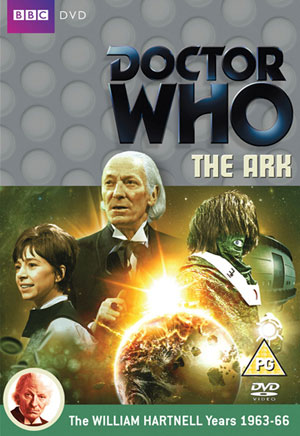
The Ark


The Ark is a fascinating example of Doctor Who at its very best.  Essentially a warning against taking advantage of others, and the ingrained xenophobia prevalent in much of society, it throws the audience from the relative safety of the ‘known’ – the Historicals – and the unknown – the sci-fi stories – by suggesting that all that we have seen has been within one particular quadrant of time, and that, instead, we are being thrown into the 57th segment of time.  Whilst in the past it has been the purpose of the crew to save the Earth from destruction and invasion, here we are asked to look at a future in which the world has already been destroyed.  The remaining humans are travelling through space, in the Ark of the title (as named by Dodo) and are searching for a new home upon which to settle.  It is a theme which was touched upon in Galaxy Four, and one which will be revisited in numerous stories in the future, whether with humans, in stories like The Ark in Space, or other alien species in tales like The Horns of Nimon.  The very nature of these nomadic people throws the audience, forcing us to question exactly how we would react given the same situation.

From the opening of the serial, we are greeted by wonderful sets, designed by Barry Newbery, which create a truly magnificent sense of scale.  The jungle set is wonderful, and the cutting between film and video is almost flawless.  Indeed, one of the strongest things about this particular serial is the brilliant direction from newcomer Michael Imison.  This is the only serial he directed, but it is difficult to see why – he has a natural flair for interesting shots, making great use of cranes and filming through sets to create a sense depth of field which is rare in early Doctor Who.  Imison is also responsible for the creation of the Monoids as they appear in the finished show – it was his decision to reimagine them as one-eyed monstrosities, and it was at his suggestion that they used the ingenious concept of a ping-pong ball to create the moving eye.  

What is rather intriguing about this first serial is the character of Dodo, as played with childish enthusiasm by Jackie Lane.  Dodo is far and away my least favourite companion of the first Doctor, and one of my least favourite companions ever, and upon re-watching this serial, and a couple since (I’m writing through a backlog of viewed stories due to my accident last week)it is easy to see why I have such a disdain for her.  In the fantastic novelisation by the serial’s author, Paul Erickson, Dodo’s character is granted a variety of layers – and until the DVD was released, it was the only experience I’d had of her original adventures.  I’d seen her briefly in The War Machines – very briefly! – but neither The Ark nor The Gunfighters had been released, so I’d not had the dubious pleasure of seeing Lane in action.  To some extent, I wish that were still the case.  She’s just so dreadfully irritating, constantly...  But more on that in later blogs.  This is probably her at her very best, not that that is saying much, mind.

From her very first moments, she plays the part with doey-eyed excitement, bubbling on (no longer with her non-specific accent from the week before) about being in Whipsnade.  Quite why she questions the idea that the TARDIS really could travel through space and time – yet never even questioned the ‘bigger-on-the-inside-ness of it all – grates on me.  The fact that she has disappeared into the bowels of the ship, to get changed into that most ridiculous costume, shows that she hasn’t simply stepped in and then back out again at their new destination, so some time must have passed.  Incidentally, the costume is rather an odd choice too – it had been said that the idea for her character, originally at least, was to dress her up to highlight the frivolous nature of her youth, with her excited by the prospect of fancy dress.  Unlike Ian, Barbara and Susan though, back in The Reign of Terror, the costume is preposterously out of place.  Purves does his very best at trying to calm her performance down, but even he struggles to restrain her.

The Monoids lurking in the undergrowth is rather creepy, and even when I am aware of their presence, the way in which they seemingly materialise is chilling.  Through clever camera angles and intriguing set design, they are utterly hidden, and the sheer number of them present still sends chills down my spine.  The opening scenes are actually rather wonderful – the editing between the elephant and the TARDIS crew looks utterly standard by Doctor Who conventions, but the audience are thrown by the sudden interaction with said elephant.  Rather than what we have come to expect – stock footage of animals interspersed – we are instead treated to a moment of absolute pleasure as Hartnell, Purves and the irrepressible Lane get to play with a baby elephant!  It’s magical, and again adds to the grand scale of the production.

The scenes with the Guardians are rather chilling too – the last descendents of mankind are portrayed as a bunch of dithering people, running their own form of judicial service, and waited upon hand and foot by the Monoid slaves.  The trial sequence in which we see them handing out their brand of justice – miniaturisation – is unnerving, although it does raise a strange point.  The ship on which these nomads travel will take 700 years to reach Refusis II, yet the punishment is to be miniaturised for 700 years.  As such, the criminal Guardian being punished is being afforded a second chance; a life on the new colony.  Meanwhile, those Guardians toiling on the travels will perish one by one as the ship makes its journey towards their destination, preventing them from ever seeing their future world. 

Dodo’s cold, a rather irritating little bit of characterisation at first, actually turns out to be a central plot device, which is rather clever.  The idea that the humans from the 57th segment of time have lost their immunity to the virus is wonderful, and provides a thrilling drive for the first two episodes, which at first glimpse seem to be all there is to this story.  Unnervingly, the Guardians on the ship have a rather distasteful slant on this – whilst Monoids suffer hugely, dropping like flies, it is only once one of the humans die that anything is genuinely done about it.  There is a very clever moment, whilst the time travellers are locked up, that seemingly diagetic music during the beautifully choreographed Monoid funeral procession is commented upon – Dodo makes a flippant comment that it makes them sound like “savages”, despite the honour evident throughout.  The model shot of the corpse being ejected into space is smashing too.

What is odd about these scenes of the virus spreading is not how the humans and Monoids are affected though – it is the fate of Steven.  For some reason, when one of the TARDIS crew is requested to represent them, it is he, rather than the Doctor, who steps to the plate.  Whilst Purves is given a magnificent speech, spouting platitudes about xenophobia and how the humans haven’t changed – "That the nature of man, even in this day and age, hasn't altered at all. You still fear the unknown like everyone else before you" – but then he too, inexplicably, succumbs to the illness working its way through the crew.

 Of course, the Doctor is given the opportunity to save the day – and does, incredibly quickly.  And so the group return to the TARDIS, with Hartnell looking painfully uncomfortable all the way on the electric car, back to the TARDIS and off on their next adventure...............

...............except they aren’t.  This is the same jungle set.  We’ve been here before – only moments ago, in fact.  The serial manages to knock the audience completely off balance with the simplest of devices, and it is marvellous.  Never before have we seen the Doctor return to an exact location, and see the aftermath of his actions.  Imagine him returning to the streets of Paris following The Massacre, the pavements still slick with the blood of the Huguenots.  Or back to Kembel years later, surrounding by the ash of the fallen.  But we still don’t know why the TARDIS has decided to bring them back – until Dodo spots the statue, previously only two severed feet, which has now been completed – but with the head of a Monoid. So the Doctor and his crew rematerialise on the Ark 700 years later, and all of a sudden we realise that the Monoids weren’t simply set-dressing – they were the integral part of the plot.  All along, they were taken for granted by everyone – with the slight exception of the Doctor who thanks one for his service in the laboratory; and then we realise that we’ve taken them for granted too. 

In fact, as with Steven in The Massacre, we realise that everything that happens is due to their interference, and they’ve brought about the last hopes for humanity through their meddling and spreading Dodo’s common cold.  It is suddenly essential that they interact, and somehow get things back on track – it is their responsibility.

The Monoids themselves work magnificently – with their single eye swivelling back and forth, and the voices provided by the ever-brilliant Roy Skelton and the able John Halstead, they embody magnificently the oppressed striving for their own rights, and becoming megalomaniacal with the power available.  The very idea that the virus drained the will power of the humans is a nifty one – and through their lack of willpower, the Monoids have risen to become dictators, using the remaining Guardians as their own slaves. 

Parallels between World War Two and alien races are nothing new to Doctor Who – arguably best portrayed through the Daleks and their similarities to the Nazis.  Here, though, Edmund Coulter’s portrayal of Monoid One, the leader of the Monoids, manages a cleverly balanced performance, reminiscent of Adolf Hitler on the stands at Nuremburg.  His gestures, sweeping arm movements and decisive chopping motions, become more and more erratic as the serial continues, and there is a wonderful synergy between him and Skelton, off-screen providing the voice.  It’s a lovely, and utterly justifiable, acting choice – a natural progression from the sign language, seen earlier, continuing even after the creation of their voice boxes.

Upon their discovery wandering the deserted ship, the Doctor and his crew are swiftly bundled off to the security kitchen – yes, really! – and kept prisoner.  What is lovely about this scene is that just before their arrival, we get to see two of the human slaves, Manussa and Dassuk, discussing the Doctor, and referring to him as a legend, a fairy tale to keep up the spirits of the oppressed.  In hindsight, it is a wonderful nod to the importance of the character, and one which is still as relevant today; indeed, it is this very notion which is used in the rebooted series of the show which proves to be the saving grace of the world in Last of the Time Lords and a title which proves to nearly be his downfall in The Pandorica Opens. 

 The Doctor and Dodo are forced by the Monoids to assist in a reconnaissance mission to the planet Refusis II, with Steven forced to remain on the ship as insurance.  The model shots here are excellent, and again Imison does a wonderful job of creating a realistic depth of field through deep-focus shots and use of false perspective.  Upon their arrival on the planet, Two and his companions from the launcher discover a seemingly deserted planet and a glimmering city.  Once inside the city, Two decides to attract the attention of the Refusians by – wait for it – smashing a vase or two.  Really.  When the Refusians finally ‘show’ themselves, there is again some wonderful direction – as invisible creatures, their movements are unseen but the effect that they have on their environment is perfectly visible, and the movements of flowers and furniture is wonderfully realised without looking in the least bit staid.  Likewise, the model shot of the launcher leaving the planet surface in episode four, with a Monoid left looking dumbly after it in the background, is simply stunning.

The Refusian voice is provided by Richard Beale, delivered in rich and dulcet tones creating a sense of presence and power, and as it tells of peace and tranquillity it is easy to be absorbed by the exposition – and the destruction of the launcher, with Two inside, is wonderful, as is the cliffhanger at the end of the third episode, with the Doctor and Dodo stranded on Refusis II, with no ship and no way of communicating.

The fourth episode is sadly where things really start to fall apart – whilst the direction remains clever and innovative, the plot begins to spiral, helped by the costume design of the Monoids.  Whilst the faces and upper torsos are cleverly realised, looking alien and menacing, the movements of the actors are somewhat inhibited by the fact that their legs are practically bound together by the lower part of the outfit, and they end up waddling rather comically.  As such, the Monoid rebellion loses the gravitas it deserves – the entire motivation for the civil rebellion is that Four argues with One, and so almost every Monoid is massacred.  The resolution of the storyline involving the double-cross of the humans is wound up far too easily – the Monoids gloat about the bomb being inside the head of the statue, and so the Doctor tells Steven and the remaining Guardians, and the statue is disposed of.  It all seems a little too easy.  It would have been nice to have strung the resolution out a little further, particularly for the audience – had we been kept in the dark a little longer it may have maintained some of the dramatic impact.

In fact, the scenes of the bomb being removed from the Ark, carried by a Refusian, offers an interesting and puzzling thought – just how big are these things?  They are able to fit into the Launcher, suggesting that they are no more than 7ft tall, and yet they have the strength so that one of them can carry the vast statue, which must way hundreds, if not thousands, of tonnes, and place it into the ejection bay!  (Although the movement of the statue must once again be praised – a simple effect, yet masterfully handled)

Following the Monoid rebellion, and the removal of the bomb, we are treated to a lovely speech by Hartnell, as he reminds them that “you must travel with understanding as well as hope. You know, I once said that to one of your ancestors, a long time ago.”  The crew then depart, leaving the humans and the Monoids to get along, under thee always watchful gaze of the mighty Refusian.

The episode ending dovetails nicely into next week’s serial, as the Doctor begins to fade in and out of existence, and there is a genuinely palpable threat as we are warned that, next week, we are entering “The Celestial Toyroom”.
Oh, and Dodo’s outfit, a huge improvement, is the first time a miniskirt was ever seen on television.  Just for the record...

Wednesday, 12 September 2012

The Massacre of St Bartholomew's Eve


Firstly, I must apologise for the shortage in updates recently – due to an accident I had involving a very small cut on my finger, I ended up blood poisoning and as a result, have ended up with my arm in a sling and out of use for more than a week.  Added to this the fact that I’ve returned to work, my time has been limited, to say the least – the pressures of secondary school teaching do not allow a great deal of ‘down time’ with which to write nonsensical blogs which may or may not be read by the general public!  I’m back now though, although only able to type with my left hand, and so there may be a number of errors throughout – if there are, I apologise in advance!

The Massacre is a challenging serial to write about for a number of reasons.  Whilst it sees John Lucarotti return to writing for the series, it strays from his usual raison d’etre and focuses on a period of history less well-known; the period in question is the 1570s in France, during the tensions between the Catholics and Protestants.  This turbulent religious atmosphere is charged from the outset, and the arrival of the Doctor and Steven doesn’t make anything any clearer – whilst historicals in the past have assured us, through known historical figures, exactly where our loyalties lie, The Massacre instead throws us into a quandary, as the two sides face off with Steven trapped in the middle.  Interestingly, there are mixed accounts of the writing of this serial – it is suggested that Donald Tosh, as script editor, rewrote much of what was delivered by Lucarotti due to it straying too far from the original outline provided.  What is evident, however, is that Lucarotti’s voice is still dominant over the final drafts – the dialogue is rich and sumptuous, and characterisation is multilayered and intriguing.

This serial is predominantly a vehicle for Steven to cement his place in the series – whilst he has been on board the TARDIS for several stories, he has always played second fiddle to the other companions, or to the Doctor himself.  Here, though, the Doctor leaves the story early into the first episode, to visit the scientist Charles Preslin, and Steven is left to his own devices, allowed to entertain himself.  Hartnell’s absences were becoming more and more common place as the series progressed, partly due to his declining health, and partly, one suspects, due to the tensions between him and series producer John Wiles.  Added to this Hartnell being on holiday during the filming of episode 2, and the result is that Purves becomes the lead actor, carrying the weight of the script magnificently.

The scenes with Hartnell, however, are wonderful – when he visits Preslin in his shop, he radiates warmth and passion, as he discusses the man’s experiments, eventually forcing the scientist to admit who he really is.  It is evident that this society is one filled with danger for forward thinkers, and adds to the tension greatly – in addition, the dialogue is wonderful, and years later a similar scene will occur with Binro the Heretic, as he is assured that he is right, and has not been wasting his life.  It is touching and wonderfully played by Hartnell and Erik Chitty. 

Steven, meanwhile, is whiling away his time in a tavern, and is taken under the wing of Huguenot Nicholas Muss.  The relationship between the two is warm and pleasant, and the dialogue between the two is lovely.  Again, however, tension is ramped up throughout as Gaston, Muss’ friend, is wary of the dangers which Steven potentially represents.  What is fascinating about these exchanges, though, is that again, we as an audience are unclear exactly where our allegiances should lie – whilst the Huguenot’s  seem welcoming, it is clear that there is danger there.  Upon the arrival of Anne Chaplet, a terrified serving girl, we are asked to assume that they are the ‘good guys’, since she tells of the Catholics and their plans to execute more Protestants, as they did in “Vassy”.  But again, Vassy is a name which means nothing to us, and as such we still sit on a precarious and unsure line.  It is a dangerous game which Lucarotti plays with the audience, easily wrong-footing us.  Back story is provided through this naturally-flowing exposition, as we are enlightened to the fact that a marriage between a Catholic and a Protestant is the cause of the unrest throughout France.

The cliffhanger at the end of episode 1 is fantastically delivered – the revelation that the Abbot of Amboise is identical to Hartnell comes as a surprise, and for a contemporary audience must have been a wonderful revelation – after Hartnell has been doubled by a variety of different people in a number of serials, including the laughable sequences in The Chase, it is good to see that here, Hartnell is given the chance to shine in dual roles.
 
The second episode serves only to further confuse the audience – interestingly, this forces us to identify with Steven’s confusion, as he remains equally unsure who he should be working with or for.  As he thinks the Abbot is actually the Doctor in disguise, he is determined to infiltrate the Catholic camp to find out. But by revealing that he knows the Abbot – or does he? – he inadvertently turns his only friends in this dangerous time against him.  He is threatened with violence from Gaston and forced to trick Nicholas, but all the while it remains unclear whether he is right in any of his actions.

The introduction of the Abbot also allows the introduction of my favourite performer in this serial, Christopher Tranchell as the magnificent Roger Colbert.  Colbert is the Abbot’s secretary, and he oozes self-importance and disdain for his surroundings.  Tranchell is wonderful, and the danger he represents is evident in his scenes with the Huguenots protecting Anne – his clipped delivery of the phrase “I see” when his request is rebuffed is chilling.

The dialogue is an absolute delight throughout this serial, with the greatest gem being “You see shadows where there is no sun” – every character is wonderfully articulate, and there are no caricatures in any of this – each and every performer is smart, smooth-talking, and – again – potentially dangerous. 

The revelation provided by Steven’s eavesdropping of the meeting in the Catholic base is another fascinating one – the discussions of assassins and codenames is wonderfully engaging, and the discussion of The Sea Beggar allows the audience a little insight, putting us one foot ahead of Steven.  Although he stayed in the home of the Admiral de Coligny, Steven is unable to connect the dots, although I would imagine most of the audience can.  Tension is ramped up further still as the audience realise the danger to the safety of France, and indeed the Dutch whom de Coligny is so desperate to assist.  The ending of the episode consolidates the fears of the audience, as de Coligny says “The Sea Beggar – a title I’d be proud of!”

Episode 3 is interesting for a number of reasons – after all of the discussions in the preceding episodes, we are finally able to put faces to the names, and Barry Justice and Joan Young, as King Charles and his awe-inspiring mother Catherine de Medici are wonderfully drawn, each putting in fantastic performances as a dysfunctional family whose every whim could have potentially devastating effects for France and the rest of Europe.  Charles’ despair is played brilliantly, as he attempts to rule with an iron fist but is constantly undermined by his interfering mother, the real power behind the throne and the person responsible for the plot to massacre the Huguenots. 

Whilst the court intrigue takes centre stage throughout this episode, Steven is still desperately trying to unravel the clues he has discovered, and following his evasion of Nicholas Muss, he is reunited with Anne Chaplet, the serving girl he spared who has been kicked out of the Admiral’s home for standing up for him, refusing to believe that Steven could be a spy.  Steven and Anne discover that not only is the Abbot not the Doctor in disguise, but that the Admiral is the target of the assassination attempt, and rush to assure Nicholas of their suspicions and their loyalties, only to prove to be too late – the Admiral leaves the meeting in the Louvre but, thanks to good luck, the attempt is a failure and the damage is not fatal. 

What episode 3 allows, and one of the reasons that it is one of the most sought-after of missing serials, is that we finally get to see Hartnell sink his teeth into his dual role as the Abbot.  Interestingly, though, whilst many claim that the Abbot is played in a completely different style to the Doctor, in audio alone it doesn’t seem too different a performance.  One can only imagine how Hartnell approached this secondary role – often physically striking with the posture and gestures as the Doctor, much of the difference may lie in the nuanced performance, as vocally it does not seem too far a cry from his portrayal of the First Doctor.

The Abbot’s downfall is due, for the most part, to the failed assassination attempt.  He is deemed ineffectual and dangerous, and is swiftly killed himself by Tavannes and Colbert.  The murder causes a riot, as the locals gather around the fallen corpse of the Abbot, and helps the Royal family – specifically the Queen Mother – to gain the support needed to begin the massacre.  Again, from a moral standpoint, it is difficult to tell who exactly we should be siding with – whilst the rabble of Catholics is clearly bloodthirsty and incensed, the reasoning is clear and understandable, with evidence which clearly supports their actions.  The Queen Mother monopolises this, using it as the lever to force King Charles to act for what she holds is the ‘good’ of France, protecting the throne from the Huguenot would-be King, Henri.  What is important to note here, though, is that it was through Steven’s interference in history that all of this happens – had he not gone to see the Abbot, Tavannes would not have ordered his death, and the Catholics would not have risen up against the Huguenots.  Hartnell’s line from The Aztecs is suddenly ringing in our ears once more, about how “history cannot be rewritten – not one line!”  Again, the question is raised, though, as to whether the time travellers have changed or influenced history.  When Hartnell reappears in episode 4, as the Doctor, he makes it clear that the date is significant, and he knows of the eponymous massacre to follow.  So the massacre is, indeed, etched into the history books.  But the chief cause of the execution is predominantly Steven’s role in all of this, forcing the audience to realise that, all along, the TARDIS was destined to arrive at this point in history, to ensure that history followed the correct path.

The third episode ends with Steven’s discovery of the Abbot’s body, and the attack from the Catholic mob, as he is a known Huguenot sympathiser.  It is a troubling scene, and it must have looked fabulous too – the fury in the voices of the nameless hordes is wonderful.  The arrival of the Doctor in episode 4 frustrates me mildly – no excuse or explanation is ever given for his absence over and above the fact that he was “held up”.  His refusal to take Anne with him, instead insisting that she locks herself away safely, is odd – companions have been made out of lesser people, after all, and Anne’s function has been important throughout this serial, aiding Steven in his hunt for the truth.  His rejection of Anne is an important one though – and again, it allows us a pivotal moment, and one which will not be revisited until Tom Baker is alone for The Deadly Assassin, where the Doctor is stranded, sans companions.  Hartnell, unlike Baker, plays this scene wonderfully – utterly alone, abandoned and without companions, his soliloquy isn’t played as tongue-in-cheek aside, as Baker does.  Instead, it is heartbreaking, reflective and realistic.  He realises that, after the death, destruction and abandonment of the last two serials – leaving Vicki in burning Troy in The Myth Makers and being partly, at least, responsible for the murders of Katarina, Bret and Sara in The Daleks’ Master Plan – he is at the lowest point in his life.  The fluff in the line – as he mispronounces Chesterton’s surname – is a wonderful nod back to the former companions, but that he corrects himself, catching himself out in the mispronunciation is what is truly heart-warming.   Never has Hartnell seemed so vulnerable.

Redemption is provided, though, in the form of Dodo – Dorothea Chaplet stumbles into the TARDIS, expecting it to be a normal police telephone box.  Her surname gives the Doctor and Steven some grounds to start again – perhaps Anne didn’t die after all.  Yes, it’s an inconsistency, as the maternal name shouldn’t have been passed down.  The novelisation goes some way to cover this, giving us a brother to Anne who would have carried the family name.  But this doesn’t matter either way.  Whilst Dodo is one of the least popular of companions for many fans, she has a functionality that we shouldn’t overlook – she reunites the Doctor and Steven, and allows our travellers to continue as they were.