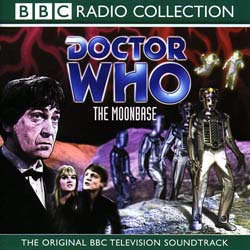
For many years, The
Tomb of the Cybermen was regarded as the holy grail of Doctor Who – fans spoke of it with tones of veneration as though it
were the single greatest piece of television ever. Those that hadn’t had the chance to see it
first time around were remiss that they missed the chance, and when it was
eventually rediscovered, people raced to see it, and many were ultimately a little
disappointed. It is still held in high regard by some, but for a large number it sadly didn't live up to the hype. It’s very standard fare,
really, particularly by Troughton’s standards.
It’s a base under siege story, and the earliest complete Troughton
serial existing at the moment in the vaults, but that’s all that is really
going for it. Troughton is superb – and
being given the chance to see every single moment of his performance allows us
to see more of him than we ever have before.
There are moments in serials such as The
Power of the Daleks, The Macra Terror and The Evil of the Daleks which are no doubt sublime; because we
cannot see them, though, we take it for granted. Here we are able to witness just how nuanced
his portrayal of the Doctor is. There is
the potential for it to have been brilliant, but there are so many weak moments
that it is by no means the perfect serial that it could have been.

The serial opens with a wonderful prelude of sorts, as the
Doctor and Jamie welcome Victoria into the TARDIS. Deborah Watling’s character was a late
addition to the crew in the previous serial, only meeting our time travellers
in episode 5 of the 7-part The Evil of
the Daleks. As such, she doesn’t
have the relationship built up with the travellers that we’d expect from the
outset; unlike Vicki’s introductory story, The
Rescue, which focussed solely on her and her troubles, Victoria is given a
story similar to Steven’s introduction, which was in the penultimate episode of
The Chase. It works surprisingly well, and one thing I
am particularly taken by, doing this experiment, is how my opinions of
characters can so swiftly change. I
always took Victoria to be something of an irritation, a typical whiner who
tags along with the Doctor and Jamie through necessity following Evil, rather than by choice. Now, whilst that is true to some degree, what
is also surprising is how quickly she takes everything in her stride, and how
proactive she is.
What is also wonderful about this short prelude is that is
allows Hines, as Jamie, the chance to have grown as a character too. When he joined the crew, he was the boy from
the past, out of his depth and asking silly questions that a contemporary
audience would scoff at. Now, though, he
has become the old hand in the TARDIS, and is able to give Victoria a guided tour
without issue. No longer is he the boy
afraid of “flying beasties”; instead he gestures to panels of knobs and levers
with a nonchalance, talking of them as “controlling our flight” while Victoria
becomes the incredulous traveller. The
conversation turns to a mention of the Doctor’s age, currently approximately
“450 years old” which is a wonderful little set up for a conversation in
episode three which is absolutely smashing.
Victoria is then sent to change her clothes whilst the Doctor steers the
TARDIS off through time.
 Meanwhile, in on the surface of Telos, an expedition of
various nationalities is gathered on a cliff face, whilst a black giant of a
man is lumbering on the outcrop above.
Pedler and Davis’ script cleverly introduces these characters and their
traits within moments; Viner is a whiny, snivelling man terrified of his own
shadow, Toberman is a lumbering servant with no individual brains, Kaftan is
the financier of the expedition, Parry is a caring and compassionate
archaeologist who is concerned that Kaftan and Klieg are trying to take over
his expedition. All of this is setup
very quickly, and effectively. All the
same, the direction falls a little flat; the group are all gathered, staring up
at one area where explosives have been set, and there is a fantastic explosion
which reveals nothing. Meanwhile, whilst
the entire crew are looking forlornly, off-screen we hear a low rumble –
evidently supposed to represent a landslide – and a gormless American minion
points in totally a different direction, where the tomb entrance has been
perfectly and conveniently revealed. The
incidental music here is wonderfully effective, though, and again is all from
stock; the use of silence to contrast the hubbub of action moments before the
explosion is an excellent moment of tension.
With the arrival of the Doctor and his companions, though,
the action ramps up, as does the tension.
Moments before, an unnamed explorer has died horrifically after touching
the doors into the eponymous tombs. The
Doctor and co are naturally accused – par for the course – but Troughton very
quickly takes command of the situation, informing the archaeological party
exactly what happened, where and how.
There is some fantastic makeup evidenced by the burn marks on the man’s
hands, too, which just about makes up for the dreadful accents sported by
Hopper and his crewmates – George Roubicek’s enthusiasm is palpable, as he
chews his way through lines like “it’s not exactly peaches!” and constantly
calls people “sport” or “guy”. The
writing here is partly to blame, but his hands-on-hips Flash Gordon-esque
performance doesn’t exactly help to sell the character.
 What is interesting is the disregard Troughton’s Doctor
seems to have for the lives of the people on the expedition. From the outset, he is actively endangering
everyone involved; once he hears mention of the Cybermen – although why he
needed to hear it is beyond me, since there are massive motifs stencilled
either side of the door! – he actively pushes the group forward. They are just about to give up when he helps
them to open the doors to the tombs.
Soon, he also helps the group open doors on either side of the main room
by explaining the method needed, and further assists Klieg in opening the
vaults which lead to the tomb proper. He
is flippant with each of these things – and when one considers that Klieg and
Kaftan are simply not smart enough to have managed to infiltrate the tomb
alone, and one cannot escape the feeling that all of this could have been
avoided, if the Doctor had just kept his mouth shut. Indeed, I touched on this in the last blog
update I wrote, for The Evil of the
Daleks, but we can’t help but feel that the Doctor’s impish, clown-like and
scruffy exterior is hiding much darker motives; he is still the manipulative
man we see much later in the Doctor’s travels, particularly during McCoy’s
era.
There is an interesting moment of power play between Klieg
and the Doctor, where he says that he manages to work things out by “keeping my
eyes open and my mouth shut” – as he says this, Toberman sneaks away right in
line with the Doctor’s vision lines. It
is an odd moment, one which is justified in the next episode and we discover
that he has sabotaged the fuel links on the rocket, stranding the group on
Telos. Again, the Doctor allows him to
leave, and although he makes a passing comment about the damage a large man
like Toberman could do, he never comes out with his accusations, instead just
watching and planning.
There is some wonderful comedy again between Hines and
Troughton – the scenes before the group enter where they inadvertently hold
hands always makes me chuckle aloud, and the flattery of Victoria’s dress is
equally lovely, with a quick-witted comment on the skirt length – “a bit
short? I shouldn’t worry about that –
look at Jamie’s!” Once the team are
inside the hidden city, there is a wonderful sense of scale to the place; the
set design is simply magnificent, making the most of being studio-bound as it
is, Martin Johnson’s set design is wonderful, all functional dials and huge
control panels, with sliding doors and hidden guns, as well as the bizarre
choice to have the Cyberman face stencilled on literally every surface –
indeed, even each stool has a Cyber-face staring up at you. This is only one small fault, though, as
overall the design work is a masterpiece.
The scenes in the testing room and the projector room are
suitably tense, as the title has promised us Cybermen, and the cliffhanger
allows us a glimpse at the eponymous villains, back for their next serial three
serials after their last appearance. The
reveal of the Cyberman is suitably chilling, appearing as it does in a hail of
gunfire, executing poor Haydon, the best guest actor of the group by
miles. Episode 2 opens with a recap of
this, and it is painfully frustrating – not one of them will confirm what they
must all have seen, and even the Doctor simply mutters that he “saw something”. They point out that they were all looking at
the screen – where the Cyberman came from! – yet are unsure that it is what
they saw. Instead, the group focus on
the significance that he was shot in the back, revealing the large weapon
hidden therein.
 During the entirety of episodes 1 and 2, by far the most
frustrating thing is Cyril Shaps’ portrayal of Viner; for an actor that went on
to appear in four serials, he is surprisingly one-note, all high-pitched whines
and repetitive complaints. The Doctor
investigates the dummy Cyberman and the gun which appears from the wall, while
in the central room, Toberman returns to confirm that “it is done”. Once the whole group return to the central
chamber, where Klieg continues to puzzle over near-impossible logic sequences,
Hopper returns to say, in a typically melodramatic drawl “Well, I'm going to tell you something now.
The first guy that set sets foot in my rocketship is going to stop the repair
work just like that!” As such, our deus
ex machina is in place, and the group are stuck within the tombs whether they
like it or not. Quite how everyone seems
to miss the suspicious activity going on between Klieg and Kaftan is baffling –
and this being 1960s Doctor Who they
are, of course, foreigners, lurking in the darkness, exchanging furtive glances
and whispering confidentially.
Once again, it is
due to the Doctor’s interference that the group are able to enter the actual
tombs – had he not interfered and explained the method, the group would merely
have been stuck in the central chamber waiting for Hopper and his men to fix
the rocket. Instead, the team head down
into the tombs, where we are granted the view of yet another spectacular piece
of design wok – the honeycomb design of the Cybermen’s tombs are magnificently
lit, and look incredible, particularly in the defrosting sequences as the Cybermen
are reawakened by Klieg’s meddling.
Sadly, director Morris Barry doesn’t make the most of these sequences,
instead choosing to linger on them for overly long sequences which are then
soon repeated, somewhat undermining the power of them.
 As I mentioned at
the start, what makes this serial so important is the fact that it allows us to
see Troughton, on top form, from start to finish. There are so many subtle and clever moments
throughout this serial – such as when he casts suspicious glances at Klieg down
in the tombs – that make the absence of his stories all the more painful. There is so much we must surely be missing,
things which we can only guess at. By
all accounts, several of the scenes in the recently rediscovered The Underwater Menace episode 2 show
that this serial is far from the joke many considered it to be.

The waking of the Cybermen, as I say, is an awesome moment,
and their slow rise to consciousness, bursting forth from their cocoons to the
‘Space Adventure’ theme tune is an iconic moment. Slightly less iconic, though, is the moment
at which we meet the Cyber-controller.
As he is revealed, squatting, it is far less visually striking than it
may have been. However, the cliffhanger
remains incredibly effective, as the shrill and invasive singsong tones of the
Controller utters “You shall be like us”.

Klieg is yet another of those typical human villains in Doctor Who, much like Mavic Chen in The Daleks’ Master Plan and Theodore
Maxtible in the last serial, The Evil of
the Daleks. Blinded by his own
ambition, he genuinely believes he is equal to them, but within moments of
meeting them, he is forced to his knees, a quivering wreck. Desperate for their approval, he begs and
pleads, before realising the danger that the hulking giants represent –
although that too is only a short-lived realisation, but more on that later.
Episode 3 allows us to appreciate the Cybervoices fully, and
Peter Hawkins does a wonderful job; having voiced them since their introduction
in The Tenth Planet earlier that
year, he has also voiced them in their second serial, and the nuanced
performance has been honed somewhat – for me, though, the perfect Cybervoices
are the original work of Hawkins and Roy Skelton in The Tenth Planet, where they had a horrifying singsong quality,
with the emphasis always seeming to be on the wrong part of the word. Now, though, they have a very human inflection
down to a tee, but the voices still work effectively. The droning “You shall be like us” is
chilling. Less effective is the
ridiculous buzzing noise made by the 8 Cybermen that are released and attacked
by the smoke bombs thrown by Hopper on his mission to save the Doctor and co
from the tombs. It is a horribly
invasive sound – and not in a good way – and detracts somewhat from their
menace. Similarly, the Cyberman that
pursues Jamie through the tombs is equally ridiculous, doing preposterous double
takes.

This sequence is notorious for another reason though; one of the most embarrassing things about
being a Doctor Who fan is those
moments when you pray no one will walk in on you watching it, and the fight
sequence in which Toberman is lifted by the most ridiculously visible wires is
one of those unforgivable moments in the show’s history, along with the Kandy man’s
appearance in The Happiness Patrol and
the dinosaurs in Invasion of the
Dinosaurs. I once heard someone
refer to it as being caught masturbating.
It’s that embarrassing. There are
one or two moments which baffle you – if that
wasn’t worth a retake, what kind of muck up would be?! There are moments where both Roy Stewart as
Toberman and Hines’ Jamie each trip on the way up the stairs – Hines falls
downwards, and it is only because of Troughton’s fast-thinking that he doesn’t
end up face-planting. These are still
forgivable, as one could imagine the characters, in their heightened emotional
states, tripping and stumbling. But the
sight of the enormous crampon attached to Stewart’s waistband, as well as the
cable is shocking. Worse still, Stewart
is lifted into the air before the Cyberman is even in position to lift
him.
Equally rubbish is the sequence with the Cybermats. Inexplicably, these are more than double the
size of the original one which attacked Victoria and Kaftan, and it is never
made clear whether these are supposed to be the same as the first, or a larger
model. Instead, it is left to the
audience to decide. Some ten models were
made by the FX and props guys, of differing manoeuvrability, with some fixed to
nylon wires, other remote control, and others completely stationary. When the ‘masses’ of them attack the group in
the central chamber, it is unclear precisely what is supposed to be happening,
or even what the threat is. Unlike in
later Cyberman stories like Revenge of
the Cybermen, where the Cybermats have a clear function, here they seem to
attach themselves to their victims yet do
absolutely nothing. They don’t bite,
or poison. Instead, they sit there until
the victim knocks them off. As such,
this sequences has no tension to it – the Doctor lays down a wire which is
electronically charged and it fries the circuits of the Cybermats. And there ends the threat. To be fair, they could simply have picked
them up and thrown them away. There is
another wonderful comedic moment here, too when the Doctor refers to them
having had a “complete metal breakdown” – and it is interesting that it is
Jamie who does the pantomime eye roll and sighs outwardly at this poor attempt
at a joke.
It is sequences like this which show Morris Barry’s
inability to direct action sequences; whilst the smaller moments are well lit
and tense, with suitable atmosphere, the action sequences for the most part
decline into silliness and farcical noises.
One such beautiful moment is the scene between Troughton and Watling,
where the pair discusses their families.
Victoria’s monologue is heartbreaking, and we are reminded that this
story takes place hours after the events of The
Evil of the Daleks, so she has only been an orphan for about a day. Likewise, we are given a rare glimpse into
the Doctor’s life before we met him, and he talks of a family in a poignant
speech;
“I have to really want to, to bring them
back in front of my eyes. The rest of the time they sleep in my mind, and I
forget. And so will you. Oh yes, you will. You'll find there's so much else to
think about. So remember, our lives are different to anybody else's. That's the
exciting thing. There's nobody in the universe can do what we're doing.”
It is a powerful
moment, and one with great resonance. It
achieves the difficult task of creating a rapport between Doctor and companion
which is founded on trust and love, as well as respect and admiration.
The cliffhanger of episode 3 is something of a damp squib,
sadly; having realised that Klieg is hell-bent on trying to resurrect the
Cybermen for his own demented ends, he is locked away – in the weapons testing
room. With the weapons. It’s utterly ridiculous, and adds further to
the idea that the Doctor is manipulating everyone still. Part way through episode 2, he admits that he
knew Klieg’s intentions all along, but was just watching to see “what he was up
to”. There’s a flippancy here which is
unnerving. But yes, Klieg is locked up
in the weapons room, surrounded by Cyberman weaponry; yet still sort of works. It further highlights how, due to their
absence from history for more than 500 years, the threat of the Cybermen seems
to have been forgotten. But Klieg and
Kaftan’s re-emergence at the end, and the shot off-screen followed by a scream,
is all terribly pat. The show is called Doctor Who. The likelihood of the Doctor being killed off-screen
partway through a story is minimal. And
yet... and yet... We must remember that
it was whilst facing the Cybermen that Hartnell died, regenerating into
Troughton. It was also mid-season,
although not mid-serial. But really,
dying at the hands of a madman like Klieg was never likely.
Instead, it is Callum that has been shot and wounded,
jumping in front of the ray and taking a bullet for the Doctor – making this
the second time in as many serials that someone has gladly sacrificed himself
for the sake of the Doctor. Again, it is
striking that the death toll continues to rise hour by hour, and again it
strikes me that this could all have
been avoided. The Doctor’s irresponsible
behaviour continues, though, as the group are lead back down into the tombs by
Klieg, and the group of Cybermen are revitalised, having returned to their
tombs to reenergise. And here is my
biggest issue with The Tomb of the
Cybermen as a serial:
Throughout the serial, we are told that Klieg intends to use
the Cybermen to rule the world, indeed to rule the universe, for the Brotherhood
of Logicians. Yet when we finally see
these reawakened Cybermen, who have been within their tombs for more than 500
years waiting for qualified minds to awaken them, we cannot help be struck by
how utterly inept they are. Having spent
500 years hooked up to all of the machinery within the tombs, in a state of
suspended animation, they are out of their units for no more than a few hours
before needing to plug themselves back in?
Even the Cyber-controller is in need of a recharge, his voice slowing
down throughout the scenes in which he menaces the Doctor and the others in the
central chamber – and the Doctor again assists the Cyber-controller by helping
him into the rejuvenation chamber. There
is a throwaway moment where Troughton jokes that he needs to teach Jamie how to
tie a proper knot as the rejuvenated Controller bursts through the door to the
chamber and menaces the entire group once more.
Kaftan’s death scene is another of those moments which seems
utterly redundant. With the
Cyber-controller rejuvenated, he demands that the tombs be reopened. The group refuse, so he does it himself. Kaftan runs over and throws a switch – and the
Cyber-controller executes her, before flipping the switch back and continuing
on with his mission. It is a needless
moment of self-sacrifice, albeit one which is visually very impressive as the
smoke bubbles forth from the collar of her shirt and she crumples to the
ground. Ultimately, though, her death is
only a tool which allows Troughton to take control of the situation. Toberman, part Cyberman now, is so enraged by
the death of his beloved mistress that he throws the Cyber-controller into the
entrance panels. Of course, this is
again one of those laughable effects – we see the head fall off the dummy! –
but we take it in our stride as we are working up to the finale.
I’m really not quite sure how I feel about Toberman, as a
character. My issue isn’t the ‘racism’
of having a dumb near-mute foreign looking character – we’ve had it only the
serial before with Kemel, after all – but rather the very one-dimensionality of
him generally. Had Toberman been a
character, rather than just a cardboard cut-out of a strong man, throughout,
these final moments would probably be more touching and poignant. Instead, though, we have barely seen a moment
of Toberman being human; his delight at the prospect of hurting Jamie
ultimately boiled down to a “Hulk smash”-like glee as he twisted his
fists. His dialogue has been entirely
monosyllabic and sparse in the greatest degree regardless. Toberman, once converted into a Cyberman,
seems no different. We see the oscilloscope
footage superimposed to show that he is taking orders, but even his movements
are not really that different to his shifty exit in episode 1 when he took his
orders from Kaftan. At the end of the
day, Toberman’s function is that of a slave, a servant to follow the bidding of
a master. And this is what makes me
dislike the turn of the story, as too much of it hinges on Toberman’s
character, but there just isn’t enough character there for it to rest upon. The scene in which he destroys another
Cyberman with his bare hands, meanwhile, is magnificently gory and explicit,
and genuinely quite nerve-wracking.
 The serial ends with the group finally escaping the tombs,
with the hatch locked down and the Cybermen all back in their cells, in a scene
in which we watch the “awakening” in reverse.
Once out, they are pursued by the Cyber-controller and it is Toberman, sacrificing
his life, which saves them – he forces the doors shut, regardless of the
electric current running through the system as a security measure against
further exploration. And again, I’m not
sure how I feel about this, either. To some extent, it is a moment of redemption
for Toberman – after all, it was his fault that the party were stranded on the
surface of Telos anyway. But it is
because of the Doctor’s security system that Toberman has to die at all, and
that makes me a little uncomfortable.

I’ve talked about it a number of times during this blog and
the last, but I’d just like to point out, once again, that all of this is Troughton’s Doctor’s fault! Had he not meddled, the group would have just
left. Only one casualty, the nameless
man who was looking to claim fifty pounds but who was electrocuted for his
trouble. Instead, Hayden was shot in the
testing room, Klieg was murdered by a Cyberman, Kaftan was executed by the
Cyber-controller, Viner was shot by Klieg, Callum was shot protecting the
Doctor, Toberman was electrocuted... all because of his curiosity. It’s an uncomfortable thought, that due to
his constant intrigue he has led a number of people to their grave – yes, some
of those people were ‘bad guys’, and their ends were deserved, but only because
the Doctor helped them gain entrance in the first place. To set “a fatal” current through the doors
and panels seems a little extreme, too – considering the difficulty the
expedition group would have had in the first place, it seems frivolous for the
Doctor to be responsible for any future deaths.
Similarly upsetting is the fact that Toberman’s body is simply
abandoned. He sacrifices himself for
their sake, dying in the process, and yet everyone kind of shrugs and heads off
in their own direction, with the Doctor, Jamie and Victoria returning to the
TARDIS, and those remaining of Parry’s expedition returning to Hopper’s
rockets.
And a solitary Cybermat runs past, hinting that this isn’t
the “final end” of the Cybermen we were faced with at the end of the last Dalek
serial. All told, this isn’t a bad
serial, per se. It’s far better than
some we’ve seen, and is certainly better than some that will follow. For me, though, the faults within the story
and the direction are just too distracting for it to rightfully own the title
of ‘classic’ that it is revered to be.