Showing posts with label Ian. Show all posts

Monday, 20 August 2012

The Chase


The Chase is something of an oddity.  Taken on face value, it is a rather abstract comedy.  Yet it serves two vital purposes – one is the swansong of Ian and Barbara, and the other is the return of the Daleks, the cash cow of Terry Nation and the BBC.  Much like Nation’s script for The Keys of Marinus, it is a brave piece, technically demanding as it warrants a number of elaborate set pieces within a variety of different locations.  Unlike The Keys of Marinus, though, the set pieces are far superior, with some excellent set work, blended almost seamlessly with some location filming of extras filling in for the cast. 

Following on from the ominous cliffhanger from The Space Museum, as the Daleks gathered around a monitor to declare that their enemies were to be “exterminated – exterminated – exterminated!” the serial becomes rather odd – instead of playing on the tension created here, the first episode sees the crew of the TARDIS take a short holiday.  What is particularly odd about this is that whilst the audience are aware of the impending danger, the crew obliviously hang around, dress-making, watching TV and reading, before arriving on Aridius and going sunbathing.  Indeed, the greatest oddity about this first instalment are the scenes involving the Time-Space Visualiser.  Considering that the crew are in a space ship which can readily travel through time and space, albeit without being controllable, rather than actually going travelling, they decide to sit by and become voyeurs into history.  There is a sense of passive laziness here.  It is odd, and doesn’t quite sit right.  We are so used to the TARDIS crew actively engaging in history that to see them prefer to watch them from the safety of the ship seems strange – particularly considering the way in which this story unfolds, but more on that later.
 
The Time-Space Visualiser scenes are entertaining enough, mind – the deadpan delivery of Abraham Lincoln’s Gettysburg address is wonderful, although rather tedious, running for nearly two minutes and including more than half of the original speech.  The scenes with Shakespeare and the Queen are wittily handled, as he thinks about the possibility of writing Hamlet.  The most bizarre section, though, is the performance of the Beatles, delivering their “classical” music.  Seeing Ian dancing is awkward – one can imagine him at a school disco, pupils cringing on the school benches as he does a little jig reminiscent of Susan’s dancing in An Unearthly Child. 
 
Richard Martin’s direction is always, at best, sloppy, and The Chase is no exception.  That said, there are a few neat directorial decisions which show some potential flair – the scene in which the crew decide to go out onto Aridius is wonderfully shot, covering for the absence of the central column in the TARDIS by having Hartnell looming into shot, with a POV angle as he leans forward to flick the controls.

15 minutes passes before there is even a re-emergence of the Daleks, as Barbara pops back in to the ship to turn off the Time-Space Visualiser, seeing the Daleks in their control base discussing their imminent attack and their own time machine.  Terry Nation’s obsession with having the Daleks repeat phrases which are supposedly threatening is one of my biggest bugbears about his writing, and this scene particularly gripes me where, once the Doctor has joined Barbara at the monitor, she says “Doctor, he said ‘TARDIS’” – the Daleks in question said the word about 20 times before we cut back to our time travellers, and whilst Hartnell plays the Doctor as a doddery old man at times,  I don’t think that there is anything wrong with his hearing!

The cliffhanger to episode 1 is strange – it is either very clever or very, very silly – and sadly I think it comes across as the latter.  As the Dalek emerges from the sand, it is reminiscent of the incredibly effective cliffhanger from episode 1 of The Dalek Invasion of Earth, as the Dalek emerged from the polluted waters of the Thames.  Here, though, we instead have a wheezing, groaning Dalek, forcing its way up from the sand dunes.  What makes the Daleks so impressive and unnerving is their very alienness, but here, Nation has elected to make them humorous and human – we would, ourselves, groan as we pushed our way up from being buried under sand, but to see a Dalek doing so is preposterous.  It does, of course, raise an interesting question, though, and one which will be revisited throughout this serial – but not fully cleared up until Remembrance of the Daleks some 23 years later.  The emergence of the Dalek in a vertical manner suggests that the Daleks are able to levitate, or float, somehow.  Is this the first ever flying Dalek?!  We later see them over several floors on the Mary Celeste, too, although in the haunted house of episode 4, Ian makes a comment about the top floor being “safe” due to the presence of stairs.

The planet, Aridius, is very dry, with nothing but sand dunes for miles – it’s arid, see?  As always, Nation’s writing is either questionably clever or, more probably, lazy.  Mechanus is peopled by machines, Aridius is arid...  the issue with these place names, however, is that since Mechanus was originally empty, and the robots were sent there by humans, surely it would have had a different name before – either that or it’s one hell of a coincidence.  Likewise with Aridius – we are told that originally the entire world was underwater but dried out due to the twin suns burning down.  Again, if that is the case, then it raises the question ‘did they rename the planet after the droughts?’ or is that, too, just lucky?

Richard Martin clearly considers himself something of an auteur – the use of similar locations (always sci-fi) as well as a staple cast is a trademark of auteurs like Scorsese and Tarantino.  Most of the cast in this serial has worked with Martin before, most noticeably in The Web Planet, and so were clearly used to his rather sloppy management. 

The costume and makeup on the Aridians is impressive – if you look beyond the blatant bald cap, of course – and their simpering performances are quite enjoyable.  It is easy to understand why they are such turncoats, willingly handing over the TARDIS crew with nonchalance and resignation.  They are effete, camp with no way of defending themselves, and Hartnell’s acceptance of their motives is brilliantly handled;  he doesn’t shout or bluster, but simply looks disappointed.  Whilst it is difficult to imagine a more modern Doctor simply swanning off and leaving a race of people to die at the hands (or tentacles) of the Mire Beasts, Hartnell becomes utterly justifiable in his motives.  The scene in which the Aridians are being forced to unbury the TARDIS for the Daleks is particularly funny – they are shifting the sand grain by grain, with furtive and terrified glances over their shoulders throughout. 

The Mire Beasts themselves are actually rather impressive – particularly considering the abomination of the Slyther in The Dalek Invasion of Earth.  Again, it was Verity Lambert’s input which ensured these were more effective, insisting that Martin shot them cleverly from well-lit angles, as opposed to head on as before.  Jack Pitt, as the main Mire Beast, later appears 3 more times in this serial, as a variety of characters, mostly underneath huge costumes, and the strange movements with which the Mire Beast drags itself along makes the costume a little more believable. 

Once the crew escape from the Aridians, thanks to the collapse of a partition wall keeping the Mire Beasts enclosed in their part of the underground city, there is a rather obscure scene in which Hartnell and Russell, with an interjection from Maureen O’Brien too, defeat a Dalek, by hollering obscure names at him – in no other serial could the crew get away with referring to a Dalek as “Fred!” and “Archie!” with any modicum of self-respect.  That these names were adlibbed by the crew is all the more obscure and telling – even they couldn’t take the script seriously.
 
Once back in the TARDIS in episode 3, Hartnell refers to the incident with Fred, saying that they had given the Daleks “a very good hiding”...  which of course they didn’t.  We know that there are 6 Daleks on board their Time Ship (cleverly created by having the same three rotates through the doors, off screen, and re-entering, a trick later used in Day of the Daleks to equally strong effect) yet they have only destroyed the one.  Indeed, the discrepancy in numbers of Daleks throughout is very confusing, and again a sign of sloppy direction on Martin’s part.  Despite one being destroyed on Aridius, and another falling off the Mary Celeste, and yet another being thrown to the floor by Frankenstein’s monster in the haunted house, when we get to Mechanus there seem to be more than six Daleks still going strong!

Again, the Daleks are made to seem rather stupid and a little too human at other points in the serial as well – in episode 2, following a command being given, the commanding Dalek turns back to the first Dalek and barks “Well?  See to it!”  Throughout episode 3 and again in episode 4, one particular Dalek seems entirely unsure what the hell is going on, mumbling and stuttering its lines, like Gareth Gates with laryngitis.  It all seems rather surreal.  Added to this Dudley Simpson’s frenetic music style, with some very odd choices throughout, and again it is unclear whether we should be taking this whole thing seriously or not.
 
On the up-side, however, episode 3 does include some excellent set pieces and design work, and allows for some comedy where it is clearly intended – Peter Purves’ turn at hamming it up as Alabaman tourist Morton Dill is brilliant.  Purves also has some fantastic adlibs, such as speaking into the Dalek plunger.  In the scene on the Empire State Building, South African-born Arne Gordon, formerly a Menoptera in The Web Planet, gets a chance to do his best Columbo impression (about 3 years earlier) and a rather burly man, looking every overweight inch the American tourist, has a fabulous little moment where he towers over Dill, presumed insane. 

Following the scenes on the Empire State building, and with the time between the TARDIS and the Daleks decreasing with every landing, the crew arrive on board the Mary Celeste, and Barbara is promptly sexually harassed by a sailor presuming that she is a stowaway.  There is some comedy here, but it is very quickly stopped with the rather bleak scenes which unfold upon the arrival of the Daleks.  Terrified superstitious sailors all prefer to jump into the sea, abandoning ship, than deal with the invaders, and there is a rather horrific moment where a woman, with a child wrapped in swaddling clothes, also jumps overboard.  Jack Pitt once again appears onboard, this time as the ship’s Steward, and actually gets to speak before plunging to his demise.

But this brings me to my biggest issue with this serial – and one which would, admittedly, have made a rather dull story.  Why do the crew ever leave the safety of the TARDIS?  It is quite clear that as soon as they have landed they will need to leave again, once the ship is ready, and yet every single time they elect to exit, often split up, and usually get into trouble.  The TARDIS is impervious to the Dalek attack, which has been established, and so why they do not simply wait until they reach an ideal location is utterly beyond me.

Episode 4 is another of those surreal moments, and it all seems a little unclear on the intentions.  Nation had originally written the scene to take place within the human psyche – indeed, Hartnell’s explanation for their presence in a house filled with ghosts, ghouls, bats and legendary monsters even confirms this.  Verity Lambert argued that this would never work within the realms of the remit of what the show had already established, and would open a can of worms, a Pandora’s Box of troubles for them.  As such, it was rewritten that the house was in fact a theme park amusement, abandoned.  Why the robots are still roaming the attraction, and quite why they are so violent towards the guests, is never explained – perhaps it is because they are violent that the theme park has been abandoned?  Who knows?  What this particular episode does do, to some extent, is pave the way for the Troughton serial The Mind Robber, set in the Land of Fiction, and inhabited by fictional characters – a place later revisited in the arguably non-canonical Big Finish audio with Colin Baker’s Doctor, Legend of the Cybermen.  Fortunately for the serial, this new justification can be used to excuse some of the poor SFX – the bats clearly on strings, the bad dubbing over Dracula’s robotic voice and the like are more excusable when looked at as a faux theme park attraction.

The end of episode 4, and the majority of episode 5, drives me crazy.  It isn’t that the idea of a robotic Doctor is a bad one – it is genius, to be fair, as a way of separating the TARDIS crew and dispatching them one by one.  Unfortunately, it is Richard Martin’s cack-handedness with direction that destroys all plausibility in this.  Through selective camera angles and effective lighting, the concept could quite easily have worked.  Instead, as with the Zarbi fiasco on The Web Planet, he elects to shoot Edmund Warwick, as the Robot Doctor, directly from in front, with too little distance to hide the fact that his miming along to Hartnell’s pre-recorded dialogue doesn’t sync up with Warwick’s mouth at all.  Now, of course, because of the limitations of recording the show ‘as live’ in the 1960s, this was unavoidable for some scenes – it was literally impossible to have had Hartnell as both Doctors.  I get that, and I appreciate it.  But what I don’t understand, particularly considering only 2/3rds of the floor was used for sets, was why the locations for the separate scenes requiring Hartnell and Warwick were not closer – as if the simple fact that they claim that he is “a perfect replica” were not bad enough, Vicki then concurs.  What would have made sense were for Warwick to only double as the Doctor in those scenes shot from behind, or above, or where both were in shot at the same time.  It is made no less confusing when in a long shot, the character is played by Warwick miming terribly – and then we cut to close up and it is Hartnell.  What then adds to the confusion even further is that the production crew are evidently aware that Warwick looks nothing like Hartnell, and so in some scenes, it is Hartnell playing the replica, with Warwick miming as the ‘real’ Doctor. 

My god, it just gets me so angry.

Particularly because, other than the Warwick fiasco, episode 5 is rather well done.  The Fungoid costumes are actually rather good – also featuring Jack Pitt again! – and the idea of an intelligent life having set up this safety system, but not being present, is also very good.  Maureen O’Brien here once more gets to prove her worth, never screaming – except for the bellow she gives for assistance – and proving that she isn’t a typical companion for the Doctor.  The set design and model work is also exceptional – the Mechanoid city in particular is wonderfully realised thanks to Cusick’s plans and Shawcraft’s model work.  In fact, my only bugbear about the end of episode 5 and the whole of episode 6 is, really, the Mechanoid voices.  They are almost indiscernible. 

On the upside, though, is the return of Peter Purves, this time appearing as Steven, soon to be a full time companion of the Doctor.  Apparently, he was cast as Steven as he’d impressed the cast and crew so much as Morton Dill – which frankly baffles me, since Dill was a character created almost entirely as a caricature of ridiculous Americans, and whilst he was funny, he was hardly groundbreaking.  That said, Steven is one of my all-time favourite companions, and the realism with which he embodies his performance here is magnificent – when he first sees the TARDIS crew and asks them if they’re real, my heart bleeds – and then they ask him to repeat his name for him, and it is wonderful.  He bites his lip, scarcely willing to believe that there is finally some company for him.

Following the cartoon violence of the final showdown – which is rather disappointing, although the slanted camera angles at least detracts from the monotony of the hand-drawn cartoon explosions and repetitive chants of Daleks and Mechanoids both – comes the sole purpose of this serial;  Ian and Barbara’s farewell.  After nearly two years of travelling with the Doctor, they are offered the opportunity to return home, and it is lovely.  Of course, the very fact that they’d returned to Earth in the 1960s in episode 3 – albeit America in the 1960s – is by-the-by.  That the travellers are finally faced with a fool-proof method home is great – unlike other travellers who end up miles and years away from home, including Steven in the future, and Susan in the past – Ian and Barbara are finally given the opportunity to return to their own place and time, and it is that Ian is so slow to realise the ramifications – and that even when he does, he waits for Barbara’s approval first – that is so genuinely wonderful about this.  The scene in which they beseech the Doctor to assist them to return never fails to make me shiver;  as with Susan’s leaving, it is Hartnell that really sells this, and his solemn acceptance, leading the teachers into the machine, and then his mute resolution to not turn around and see them leave is beautifully underplayed. 

The photo montage is a little cheesy, but having said that, it seems only right – after all of the wonders of time and space, the look of genuine excitement on their faces as they scare pigeons and then laugh at a bus driver is fantastic.  As we cut back to the Time-Space Visualiser, to see Vicki and the Doctor looking back at them, watching from their unknown place and time, wondering the stars, Hartnell’s speech resonates hugely – “I shall miss them.  Yes, I shall miss them”.
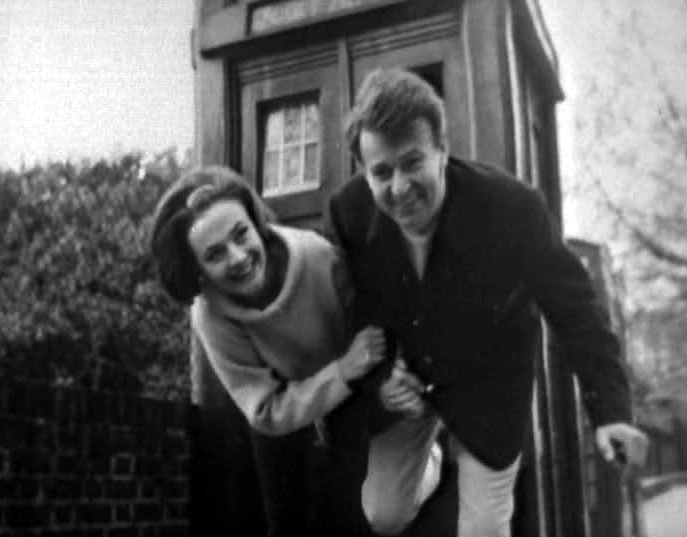
Me too, Billy.  Me too.

Sunday, 19 August 2012

The Space Museum


The Space Museum is actually a very interesting concept, and one which is pivotal to Doctor Who in general.  Whilst the idea of interfering in the natural progression of time is one which has briefly been referenced in a number of other serials – notably the historicals, and particularly The Aztecs – it has always been the history of others, their past or future, which have been messed with; in sci-fi serials it is the status quo for the team to meddle and interfere, but in this, it is essential that they do, as it is their own fate which is at risk.

This serial is regularly criticised by much of fandom, and for some valid reason – it is a little slow, and a little messy, and a little... well, boring, in parts.  But that is sort of the point.  It is precisely for this reason that the serial works at all – that, and a corking first episode, of course.

From the creepy cliffhanger at the end of The Crusade, this serial kicks off with a number of bizarre incidents similar to those of The Edge of Destruction – strange noises and camera angles create a tense environment where water glasses can jump back into your hands complete after smashing on the floor, and the crew end up redressed by invisible forces.  Throughout, the Doctor is rather non-committal about it all, and the use of stock music fits well with the jarring incidents.  The direction on episode 1 is particularly good, using abstract angles and sweeping movements to disorientate. 

The central premise of this first instalment is fascinating – having somehow jumped a timetrack, the crew are invisible to the environment in which they find themselves, leaving no footprints, and unable to interact with anything (sort of – but more on that later!)  The model work on the Space Museum itself is magnificent – and the painting of the set flats to create a disjointed, abstract look is equally brilliant, although the effect is diminished somewhat by the shadows of the actors proving that it is only a one-dimensional flat painted to look 3D. 

As the crew make their way through endless corridors, looking at strange exhibitions and avoiding the Moroks trooping the place, there is a strange sense of déjà vu – each room looks identical, simply with different artefacts and exhibits on show.  The scene in which they pass through the TARDIS is genuinely shocking and rather haunting – the staple idea of cutting the crew off from the ship to force them to participate in events is a cliché now, but here it is reused to great effect;  they cannot interact with anything, let alone something as secure and known as the ship.  Sadly, there is a lack of consistency to this too – when Barbara hides behind a mannequin, the whole thing wobbles tremendously, showing that they can interact with some things, just not the ones which are input via technical skill!

The cliffhanger is brilliant too – when the crew discover themselves, frozen in exhibit cases, embalmed and left there forever to be gawked at by aliens, it is terrifically unnerving, although quite why it takes them so long to spot them is beyond me.  As they gradually catch up with themselves, and the exhibits fade, and footprints appear, the look on Hartnell’s face is wonderful – “we’ve arrived!”

Episode 2 is where the story begins to lose its way, though – once we have been introduced to the Moroks, and later the Xerons, it is difficult to remain engaged.  The Moroks are a bunch of petty administrators and curators, running the museum as a way of proving their ability as leaders, but bored of the monotony of it all.  The Xerons are even worse, though – they are too ineffective to do anything, referred to as “rebels” despite their inaction, and not even deemed worth oppressing properly by the Moroks.  Both races are seen as ineffective, pointless.  One side gloats over past victories, while the other sit around, not doing anything.  It is boring – yet that is precisely the point.  The serial works as a satire, to some extent, of totalitarian regime, and what happens once that regime has forced itself upon others.  The staleness, and the monotony, are integral to the plot.  There are some rather basic costume decisions, which are frankly slapdash, which do not help to engage the audience – it is a simple case of white versus black (albeit inverted) which is even commented on by the Xerons.  The dialogue in the opening scene with Lobos, the governor of Xeros, feels rather stilted and uninspired – he moans about boredom, forcing information into his exposition for the audience’s sake, is dreadfully dull.   

There is an interesting moment in episode 2 which baffles me.  Ian stands by, goading Barbara and Vicki as they lift a heavy glass case up from around a gun.  Quite why the women are doing the heavy lifting is not discussed.  It seems like an odd directorial decision to have made – just one of the many, of course.

The scene in which the Xerons capture the Doctor – before promptly losing him again – is another oddity, and one which doesn’t seem to sit right with me either.  The way in which the Doctor hides inside the Dalek casing seems tasteless, somehow.  Whilst Ian did the same thing in The Daleks back when the series was first finding its feet, for the Doctor to do the same thing, after the Daleks had been established as recurring foes seems strange.

What this episode does well, thanks to Jones’ writing, is discusses one of the key themes of the series – the concept of time travel and the repercussions of it.  Whilst they are endeavouring to do all that they can to prevent the future happening, it questions whether they could change it anyway.  The conversation in episode 4 is striking for this very reason.   There is a sense of predestination throughout, although an eagle eyed viewer – such as myself, and no doubt many of you reading this – would notice very quickly that the future has been changed from the very outset anyway.  Whilst the 4 bodies in the museum were on screen, it was quite obvious that Ian had all of the buttons on his jacket.  In episode 2, when he loses a button, it is surely a sign that they are no longer predestined for the same thing.  Likewise, and even more glaringly, the idea to use Barbara’s cardigan to leave a trail also proves that the future has been changed – the display case-Barbara had her cardigan on, yet here Ian iis chewing his way through it to create a loose thread.

Episode 3 suffers mildly from Hartnell’s absence – after being carted off for ‘treatment’ at the end of episode 2, he is away on holiday here, only appearing in the episode reprise at the beginning, framed with wonderfully atmospheric lighting.  Where the episode is great, though, is in the relationship between Ian and his unwilling Morok assistant, played by Peter Diamond.  Diamond had a similarly wonderful relationship with Ian in The Romans, where he appeared as the faithful Delos, assisting Ian in his efforts to recapture Barbara from Nero.  Here, though, the relationship is taken in a different way; this cowardly Morok guard seems to genuinely revel in assisting Ian, subtly, and one gets the impression that it is because he is, for once, being proactive and doing something, even if it is the opposite of his orders!

Also fantastic about this serial is Vicki’s role in everything that occurs – never before has Maureen O’Brien been able to showcase herself so much, always having to play second fiddle to Hartnell, or giggling awkwardly with Barbara.  Here, though, she is the principle cause for events to have changed so dramatically.  Once captured by the Xerons, she leads them to become genuine revolutionaries, as opposed to the ‘rebels’ with a cause but without action we saw earlier on.  The scene in which she tricks the computer is so ridiculous that I can’t help but love it – but it does, once more, reinforce the uselessness of the Xerons. 

Along with the wonderful lighting in Lobos’ office with Hartnell in the recap, there is also the lovely scene in which Barbara hides from her pursuers in a room, where she is framed by mannequins.  Also effective is the slow-fade to black, before cross-fading back up to show the passage of time – this wasn’t a recording break, which are usually signposted by these blackouts.  Rather, it is a clever directorial decision, which allows Jacqueline Hill the time to slump further down and mess her hair up a bit.  It is a lovely, tense scene – until it is ruined for us at home when we see the colour of the uniform of the searcher, whereby proving that Barbara is in no genuine danger.  For someone with such an eye for creepy shadows and abstract lighting decisions, Pinfield fails miserably at ratcheting up any kind of tension.  Indeed, when the Xeron finds Barbara, he says “you can see we’re nothing like them” – and again, it is such a simple statement;  they wear black, but the Moroks wear white.  It is similar in tone to the episode in The Sensorites where they all ‘look the same’. 

Once again, though, a bug-bear I have with this serial is that it is, once again, a retread of the storyline which we have seen since the second serial, The Daleks.  Oppressors being overthrown by the oppressed, an alien race being led to rebellion by the TARDIS crew.  It is becoming a little staid and clichéd now.

Episode 4 starts with a reshoot of the cliffhanger from episode 3 – and again, this loses a great deal of the tension.  Whereas before, Ian was staring almost directly into the camera, shocked at what is off-screen (the Doctor, treated), on the second take, even William Russell can’t seem to create any real drama in his tone of voice.  Most of the acting in this fourth episode is rather uninspired, a little ‘acting-by-numbers’, as we wind up to the predictable conclusion that the crew will be fine, that they save the day and escape.  What this serial does different to others, which is rather refreshing, although not realistic considering their allies, is that the crew do end up captured, but it is the Xerons who save them.  Whilst the crew have been proactively trying to change history, and by doing so avoid becoming exhibits, they have actually played right into the cases – every step they took to change their fate has inexorably led to their capture.  It is Vicki, however, who has saved them – by pushing the Xerons to do something – anything – it has meant that the Moroks are overthrown and the crew can escape.    There is a sense of predestination throughout which is lovely – although, as I said earlier, the change in costume for Ian and Barbara proved that history had changed anyhow.

All in all, whilst this is slow-paced and averagely performed, there are some wonderful things to enjoy.  If we take the entire serial as a satirical look at the boredom which comes from totalitarian regimes, it works.  If you look at it as an exploration of the ramifications of time travel, it works.  If, however, you’re looking for it to be a fast-paced action adventure... well, you know...

Sunday, 12 August 2012

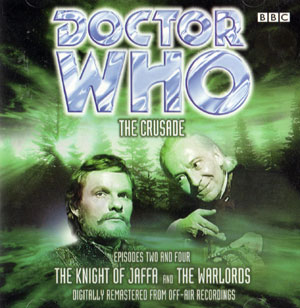
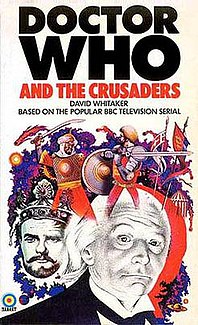
The Crusade


Now this is more like it!  After the sci-fi silliness of The Web Planet – a blog for which turned out to be incredibly divisive, so sorry if you’re a fan and so hated my blog! – we return to Earth, slap-bang in the middle of 12th century Palestine, and the third crusade.  The Crusade is written by former script editor David Whittaker, for the first time moving away from the 2-episode fillers he had been associated with, and directed by the magnificent Douglas Camfield, who had before now only worked on the third part of Planet of giants, but would go on to direct some of Doctor Who’s greatest serials, including The Seeds of Doom and Terror of the Zygons.  This serial is a rich, grand piece, similar to Marco Polo in tone and feel, telling of the involvement of the Doctor and his companions in King Richard’s invasion of Palestine in the name of God.

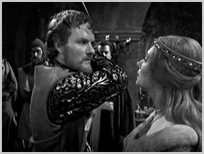
From the outset, there is a change in style from the last serial – the sets are luxurious and rich in design, believable, and the action kicks off straight away.  Upon introducing the lurking faces of the Palestinian horde, we cut to a wonderful scene between Richard – played by the magnificent Julian glover, quite a catch for the time – and his men, discussing the invasion in metaphorical terms with a beautiful hawk.  The dialogue flows beautifully, and these are the most realistic non-regulars since The Reign of Terror.  Each character is given his own nuances and inflections, rather than start caricature, and we can already see the danger which lurks beneath Richard’s civilised exterior – he is stubborn, almost childish, and determined to get what he wants.  He waves away the concerns of his men nonchalantly. 

When we see the TARDIS crew leave their ship, there is a look of despondency about it all, which is wonderful.  Following the harrowing events of the previous few weeks, Ian looks dishevelled and tired, glancing furtively about as though desperately trying to avoid trouble.  This is William Russell’s serial, really, and his strand of the storyline is magnificently delivered by Russell. 

Within seconds of the crew arriving in the forest, they are ambushed, and Barbara is kidnapped.  I feel genuinely sorry for Jacqueline Hill in some respects;  it doesn’t seem to matter where they are, there is always some element of sexual danger involved.  Hill is, as always, magnificent, and the scenes in the harem are wonderful, as are her scenes with Bernard Kay’s Saladin.  His fascination with her, due to her appearance and posture, as well as her evidently educated stature, is wonderfully handled, and Hill’s guarded responses are entirely responsible for this.

The fight sequence in the woods is wonderful – after the awkward posturing of the Zarbi and Menoptra the week before, and their stilted fight sequences as each had to carefully position themselves due to their costume, here there is something brutal and guttural about the sequence.  There seems to be a genuine, palpable threat involved.  The capture of William, pretending to be King Richard, is excellently handled – the look of delight on the faces of the Saracens is perfectly handled, and John Flint’s delivery as William is equally well-managed;  we can tell that he is terrified, yet is doing what is right for his king.  When he and Barbara discuss his false identity in their cell, the glee he shows is fantastic.
 
What is fascinating with this particular serial is the way in which Saladin and Richard are portrayed.  Whereas in The Reign of Terror certain characters from history had to be allowed to remain as they were, and as such became rather dull, with the crew unable to alter anything, here Whittaker does the exact opposite.  Kay’s Saladin is magnificent – he is noble and virtuous, dangerous yet educated and not led by baser instincts.  In contrast, we have Glover’s performance as King Richard, who comes across as brash, easily swayed by whims and volatile, an unreliable, and therefore dangerous, character whom the crew must be wary of.  The cliffhanger for the first episode is, therefore, filled with genuine danger – Richard stubbornly refuses to assist the TARDIS crew in any way, arguing that he would never trade with Saracen scum like Saladin.

El Akir, played with aplomb and oozing danger by Walter Randall, is the central villain of the piece.  After being tricked into delivering William des Preaux and Barbara to Saladin, he is determined to have his vengeance – and so he does.  The second episode deals with three separate storylines, splitting the group from 2 to 3 with ease – Barbara is still with the Saracens, but now Ian is sent to fetch her whilst the Doctor and Vicki deal with Richard.  For the third serial in a row, Vicki is something of a sidekick to Hartnell’s Doctor – such as with the theft of the clothing in episode 1 –  and she works wonderfully beside him.  It is she who sees the dangers of what they are doing, she who becomes our eyes and ears as a viewer.  In the first season, Barbara and Ian were our identifiable presence – thrown into the adventures as outsiders.  The companion has a vital role, one which we only fully appreciate when they are utterly incapacitated or missing entirely, as in The Deadly Assassin.  In season 2, though, the two contemporary teachers are utterly used to these adventures, whilst Vicki, despite being from the future, is our voice – she airs her concerns, and she deals with the Doctor in every way.  Maureen O’Brien is wonderful at these comedic scenes, as she was in The Romans.

What is fascinating about this serial is that unlike all previous historicals, it is delivered at a breakneck speed.  Whilst The Romans dealt with the events of a mere few days, and The Reign of Terror showed the length of time by cutting to location filming of someone like Hartnell walking in the countryside, here no effort is made to cover the scope.  In the four-episode format, no time is wasted on travel – a character needs to get somewhere, and so they arrive within a few minutes.  It keeps the pace ticking over wonderfully, yet somehow doesn’t jeopardise characterisation.

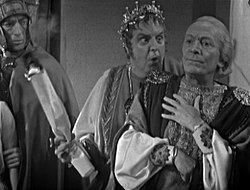
Episode 3 is simply magnificent – Jean Marsh positively revels in her part as Joanna, sister of Richard, and her “quandary” is heartfelt and painful to watch.  Her lines about something “new” in the Doctor, yet “older than the sky itself” is magnificent, and her part in the redressing of Vicki, and the chamberlain’s disgust at Vicki’s pretence is hilarious.  The scene that follows, between Hartnell and O’Brien, is touching too – her concerns that the Doctor will leave her, and that the TARDIS is the only home she has, is beautifully underplayed – O’Brien’s staccato delivery resonates perfectly.  Indeed, the scene between Richard and Joanna is simply magnificent – she refuses to be used as a pawn in the eternal game between the Saracens and the invading forces.  Saladin’s realisation of the use of this marriage shows his intelligence – “hold one hand out in friendship, but keep the other on your sword” is insightful and realistic.  The Doctor’s argument with Leicester is rather unnerving – the Doctor winds him up, yet unfairly so.  Leicester is evidently a brave and intelligent man.  His argument is sound.  And yet the Doctor goads him, calling him a fool, to cause ructions throughout the court.

Barbara’s assistance from Haroun, played with heart-wrenching realism by George Little, is stunning.  The fear and emotion his voice carries are terrifically moving, and we cannot help but realise that, whilst he is assisting Barbara for his own reasons – to kill El Akir – the crew are, as always, making things worse for the innocent bystanders of their time.  That he is so determined that his daughter should be killed rather than fall into the hands of the deadly, monstrous El Akir is terrifying – we realise that the threat of sexual molestation suddenly has even more resonance if this is the length to which someone is willing to go.  Safiya’s innocence makes it all the more distressing.  The sounds from outside of women screaming and crying are equally unnerving, and Jacqueline Hill’s face as she glances at the knife whilst embracing Safiya is wonderfully realised.  Her sacrifice to keep Safiya safe is beautifully delivered as she steps out to keep the soldiers from burning the house down.  Throughout, we can hear soldiers knocking on the doors of more and more civilians.  Once brought before El akir, we are reminded of the danger he embodies, as he tells her that the only pleasure left for her is death, “and that is very far away”.  It is horrifying, and Jacqueline Hill sells this very real threat magnificently.

Ian, meanwhile, is having just as bad a time of it as Barbara – robbed whilst laid in the desert, and then staked to the ground, smeared with honey and left for the ants to burrow into his flesh.  The torture rings true to the time, and is horrifically shocking for that very reason.   The comedy with which Tutte Lemkow delivers the lines underlies the danger, creating a dark undertone. This is only one of the very adult themes underlying episode 4, thinly veiled to protect the child viewers.  The scene in the harem, with Fatima’s betrayal for one ruby, is awful – and her demise, if that is what happens, is equally horrific, with the other women rounding on her in complete silence.  Likewise, Maimuna’s realisation that her father is on his way to rescue her is heartbreaking – she didn’t believe he would, since she has been raped by El Akir and is therefore no longer pure.
 
Also during episode 4, we have Hartnell’s plotline rushing to its conclusion, with the argument between Leicester reaching a head.  Richard’s interruption, as he prays he shall one day see Jerusalem, is wonderful – and again, the Doctor confides in Vicki that he could not tell Richard the truth, and interfere in history – these are the ground rules set out from the very beginning of the series, and reinforced in The Aztecs.  Historicals often do not work for this very reason – the lessons therein are fixed points, and in an educational remit, the series must be truthful to that.  As such, episode 4 is interesting in that the focus is removed from Saladin and Richard almost entirely – Richard appears in this one scene, and Saladin does not appear at all.  Instead, the plot is shifted to the less significant characters – El Akir must be judged and dealt with, Haroun should find his daughter safe and well, and the crew should return to the TARDIS safe and well.  As with the portrayal of Robespierre (which I am conscious is a parallel I am frequently drawing) it is essential that the true protagonists of the period continue in their way forever.  The TARDIS crew can have no real impact upon events unless they arrive in the final days of an event (as with Robespierre’s downfall). 

So Ian manages to free himself and is taken by Ibrahim to rescue Barbara from El Akir’s harem in Lydda.  Ibrahim is a wonderful caricature of the slimy, wheedling thief – what is interesting is that he is the first caricature that we have really met, throughout all of 12th century Palestine, yet he actually becomes a temporary companion for Ian.  He is a comedic part, intriguing and amusing, despite the brutal truth that he was willing to sit idly by and watch Ian die, and has probably done the same to hundreds of other travellers in his time.  He is not a nice person, but in this time no one was particularly nice – morals are ambiguous in this era, and so characters can get away with disgusting acts.  When Ibrahim refers to El Akir as a “very bad man”, Ian retorts “not the only one around here”, a knowing acceptance that in this morally ambiguous time, few people can be trusted. 

Whilst Barbara and Maimuna plan their escape, and are betrayed by Fatima, Haroun arrives outside, in readiness to take revenge against El Akir.  That El Akir’s death is so quick is fitting; he is allowed no final words, no eulogising – he simply sinks to his knees, his sword in his hand about to attack the two women, and the focus is, instead, upon the familial reunion.  Thanks to Ibrahim, Ian and Barbara have acquired horses, and are able to return to the TARDIS to meet up with the Doctor and Vicki.  The Earl of Leicester’s men are watching the TARDIS, fearful that the Doctor is a traitor, and apparently being proved right.

The conclusion to the fourth episode seems a little transitory and rushed, really, but that isn’t a bad thing – everything is wound up before then and it is only the subplot involving the Doctor and Leicester’s rivalry which needs resolution – and this resolution comes in the form of Ian, thanks to Richard’s knighting of him in episode 2.  Deceptively overthrowing the power of Leicester, claiming that it is his right to dispatch the Doctor for treachery, before taking him into the clearing where the TARDIS is set.  Whilst the crew jovially discuss this, though, it is mildly disturbing that Leicester and his men are left to drop to their knees, crossing themselves – they have just seen “poor Sir Ian, spirited away” – their faith is being tested, unnervingly, by the crew themselves, who take great delight in it.

All told, this is simply marvellous – when Hartnell and O’Brien are given comedy, Russell is given action, and Hill is given courage in the face of adversity, the performances are rarely off kilter.  Here, supported by extravagant and majestic sets, wonderful sound and truly breathtaking supporting cast performances, we end up with a stunning piece – it truly is a travesty that half of this serial is missing.

Saturday, 11 August 2012

The Web Planet


Ahhh, The Web Planet.  If I’m honest, this is the moment I have been dreading in my little task of re-watching the entire show from the beginning.  This blog hasn’t been updated for a few days for two reasons – firstly, my own personal laptop died a few days ago, with the first part of this entry (eps 1-3) already written.  Due to this, there may be a number of typos throughout this entry (if so, I apologise) as the spellchecker is a little dodgy and the keyboard layout is confusing!  Secondly, this has always been my least favourite serial of all time.  Even now, having rewatched it, I’m not sure why.  It isn’t that the effects are terrible – God knows I look beyond that often enough.  It isn’t that the sets are bad – they’re actually incredibly impressive considering what was asked for of the script.  It isn’t that any of the performances are particularly bad – they’re all at the very least acceptable, if not brilliant.  It is simply that it bores me.  I don’t know why – I truly do try my very hardest to enjoy it.  And this time, being objective and having watched the progression of the series episode by episode, it was more enjoyable.  But I think it is still my least favourite serial ever – and to watch all 6 episodes, it took three days.  More than 2 episodes a day just seems like too much to endure.


The first episode is by far the strongest, and begins where The Romans left off, with the TARDIS and the crew being dragged down onto an unknown planet, utterly uncontrollable, with the crew flustered and thrown asunder.  As they rush around the controls, desperate to find out what’s wrong with the power, there is still a huge sense of camaraderie, and what is most wonderful about it is the way in which Vicki has so easily slipped into her role as the youngest member of the crew.  Sadly, Maureen O’Brien’s character is given something of a short shrift here – one gets the impression that the part was written for Susan’s character, particularly in the scene in which only Vicki can here the invasive sounds of the Zarbi crying out, holding her hands to her head to block to sounds out; it is reminiscent of Carole Ann Ford in The Keys of Marinus. 

Whilst Richard Martin’s direction is hugely flawed for the most part of this serial – mainly due to his rather formulaic presentation of a serial which was far too ambitious given the restraints of the time – there are some wonderful touches.  The use of Vaseline on the lenses specially created for this serial is genius, and creates a truly alien feel to the serial.  Through the intercutting between scenes on the planet and scenes in the TARDIS, we really get a sense of the scope of this – outside, nothing is right.  Everything is disjointed, with light flaring from anything and everything, and the soundscape, with use of echoes, is equally jarring.  The start contrast we get between the interior of the TARDIS, warm and safe and evenly lit, against the exterior shots on the planet surface, with light catching the cast and set at bizarre angles, refracting madly, is impressive.

One would be excused for thinking that Bill Strutton, the author, had never seen Doctor Who before, as some of the characterisation seems terribly off-kilter with what we usually get with the main crew.  There is a scene in which Ian damned near dives headfirst into a pool of acid, exactly like Susan did in episode 1 of The Keys of Marinus.  Indeed, much of Strutton’s writing seems to echo all of the worst elements of Terry Nation’s earlier scripts – episode 5 is almost scene for scene the same as Nation’s episode 6 of The Daleks, with Ian leading an oppressed people to rise up against the oppressors – we have simply substituted the Menoptra for the Thals, and in the place of the Daleks, we have the Zarbi.


As with Nation’s The Keys of Marinus script, much of the difficulties here arise from the sheer ambition of the script.  Where Marinus was let down by too many sets being needed for the 6 episode run, here it is the sheer number of absurdly extravagant costumes which hinders the performance.  Given that the set used was only about 64’x67’, and the multiple locations, the entire production hugely overran at every shoot because of the inhibiting costumes, limiting movement and so preventing quick scene changes. 

Episode 2 is where this serial really starts to unravel for me, and it is down to one simple thing which should never have been allowed to happen – the costume and movement of the Zarbi and the Menoptra.  What baffles me is that only a few weeks ago, the crew landed on modern-day Earth and were surrounded by huge earthworms and flies, and yet, in Planet of Giants, it was magnificent.  The sets were incredible, with superb model work.  Here, though, the creations have been left to Daphne Dare – who usually does a very good job – but the results are dreadful.  Due to the design, particularly of the Zarbi, actors movements were hugely limited.  Due to the large number of Zarbi required, the set is cramped and movement for the other cast become less natural.  Likewise, in the cave with the Menoptra, the huge wing design means that despite there only being 3 aliens present with Barbara, the set becomes minute and awkward, and movement becomes stilted.  Added to this the work of Roslyn de Winter, who also appears as Vrestin, as choreographer of the “insect movement”, with her absurd nuances and inflections, as well as awkward arm movements and head turns, and the entire thing becomes laughable.  A number of people say that the most embarrassing moment of being a Doctor Who fan is if someone were to walk in on you watching the scenes from The Happiness Patrol with Bertie Bassett.  For me, the most embarrassing thing about Doctor Who is this.  The Bertie scene was likened by someone as being caught masturbating – and when this episode is on I can’t help but glance over my shoulder, praying no-one walks in.  My partner was in the room for some of these episodes and at random intervals, he looked up from his phone, snorted with derision, and looked away again.  Sadly, I find myself doing the very same thing.

In addition to the dreadful movements and costume of the Zarbi in particular, the sound effects are possibly the most frustrating things ever heard in Doctor Who.  Whilst I understand the point – the Zarbi all look identical, and so by not having them able to communicate in English it makes them seem even more threatening – the use of the high pitched klaxon constantly, along with bizarre undulating chords throughout, made me nauseous. 

The cliffhanger to episode 2 is quite interesting, then – after all of the awful noises, and silly dancing, the communicator is lowered onto Hartnell’s head – and the voice that rings out is beautiful.  It is cold and emotionless, but soothing too;  as the voice of the Animus, Catherine Fleming plays the part perfectly, creating a sense of danger in the most human sounding part of the entire serial.  Even the TARDIS crew sound distorted on Vortis, but the Animus is crystal clear.

Again, due to the design and the set expectations, further embarrassments happen throughout the remaining 4 episodes – in episode 3, a Larva gun stands idly by in the background as we cut from Ian, captured, to the approaching Zarbi – purely because, due to the design and the size of the cameras, the same Larva couldn’t get to the right location.  Likewise, during the battle sequences of episode 4, Zarbi’s run head-first into cameras; sets jolt as camera lenses smack into the plywood frames through which they are shooting.  Usually, these sorts of blunders would be forgivable, and you could laugh them off.  Here, though, they add to the comical, farcical nature of the entire serial, making it look even shoddier than before.  Where long shots would have sufficed to hide the imperfections of the production, instead Martin’s direction keeps the camera up close, allowing us to see each and every failing.  That said, there are some nice touches – the scene in which the Zarbi attack the captured Menoptra, chewing off her wings, is disturbing, and is made all the more shocking because the camera cuts away to Barbara’s face, and the revulsion Jacqueline Hill portrays is wonderful.

Episode 4 works to some extent based on the interesting set – the Crater of Needles is wonderfully realised with 450kg of seaweed specially shipped in.  Shot through the Vaseline covered lenses, the light sparkles and dances across this abstract set – although what causes the majority of the flickering light has little place in a children’s TV series;  since the seaweed was collected fresh from the shores down south, a large number of condoms are mixed in with the vegetation!

To add to the misery of this serial, episode 4 also introduces a third species to Vortis – the Optera, centipede-like creatures who move as though their legs are wrapped in a sleeping bag.  With 3 sets of arms – only one of which move, with limited feasibility due to the costume – they look as ridiculous as the Zarbi.  These speak, but their aggressive, grunting delivery is reminiscent of Reece Shearsmith’s character Papa Lazarou from The League of Gentlemen.  There is, much like in The Dalek Invasion of Earth, an embarrassing lack of consistency to some of the aliens however.  As with the Robomen, the non-speaking parts shamble around in far less restrained manners.  Some don’t keep their legs together, simply meandering around on set.  De Winter’s choreography, which would be more at home in some abstract physical theatre performance, obviously didn’t sink in for all of the cast.

The fight sequence at the end of episode 4 and the opening of episode 5 is, like much of the action throughout, a miss-match of angles which sow little of any consequence.  Due to the restrictions, the movements are a mess, and the bumping and knocking is dreadful to watch.  What is amazing is that whilst Strutton never wrote for the series again, Martin managed to continue directing.  This is like a car crash, intriguing but horrific at the same time.  Episode 5 is by far the most painful of these to watch, as little of consequence happens – again, as with Nation’s The Daleks, it sees the group separated, each heading to the same location via pointlessly dangerous routes – and when we get to the climax of episode 6, it turns out that Ian wasn’t even needed anyway!  Episode 6 contains the dreadful screeching of the word “Zarbi” in any number of ways, with enunciation being placed on random non-existent syllables throughout. 

In fact, I’m still not really sure what does happen at the end.  Ian certainly doesn’t help – he just climbs out of the floor in time to witness it.  The Doctor and Vicki don’t help – they’re laid on the floor, wrapped in tentacles, and Hartnell is silently giggling to himself.  Barbara saves the day, using the Isoptope created to destroy the Animus, but the direction is so bad that it is impossible to be able to tell exactly how it all happens.

But, the Animus is defeated, and that’s all that matters – the serial is finally at an end!  Only it isn’t – there’s another ten minutes of the bizarre speech patterns and discussions of light between Optera and Menoptera alike.  It is strange – when the Optera were first introduced, their speech was interesting.  The use of similes and metaphors was intriguing.  Now, though, it just seems awkward and disjointed, almost entirely filler.

But then it really is over.  I sigh a gentle breath of relief.  Whilst I am a huge Doctor Who fan, and nothing will ever change that, this is, for me, the worst the series has to offer.  It was courageous, particularly considering that it is still early in the second series, but it did it.  Maybe the reason it looks so dreadful is that it has dated badly.  If that were it, I’d feel like a dreadful cynic for disliking it.  But everything about this is so sloppy that it just fails to engage me on any level.  I’m embarrassed by it. 

Why, oh why, does this story exist in its entirety when serials like The Web of Fear, Fury from the Deep and Marco Polo don’t?  It just isn’t fair...

Saturday, 4 August 2012

The Romans


The Romans is a courageous episode, for a number of reasons – principally, it is a comedy.  It works solely based on the idea that humour is milked out of every possible scene.  Added to this the rather grim subplots involving Ian and Barbara, and it is tremendously brave – balancing humour with such gritty realism is a hard task, but Spooner does it with aplomb.  As prompted by Verity Lambert, who wished for the series to broaden its dramatic range further still, she approached Spooner to write an overtly comical story.  What is so magnificent about the comedy in this serial is the very “Carry On...”ness of it all.  From the cast, most had since, or had before, appeared in the infamous series of British films, and much of the humour and performances would be right at home in Carry On Cleo or the like.  The combination of visual gags and word play, mixed with some slapstick physical comedy, all combine to make this a very successful comedy.

From the opening of the first episode, the tempo has changed enormously, and we can see the disappointment in Vicki’s face from the outset – following on from her joining the TARDIS crew in the previous serial, she has been presented with a month of relaxation in ancient Rome instead.  The scenes of the crew nonchalantly lying around, quaffing wine and grapes is brilliant.  What this rather effectively does, though, is to cement Vicki’s place with the crew – we haven’t had adventures where they have bonded, but rather they have become a united front – that family group again, by simply enjoying each others’ company.  Soon, though, the Doctor has decided to take Vicki on a little adventure, leaving Ian and Barbara to continue their relaxation, and outrageous flirting.  The action starts almost immediately, of course, as the Doctor and Vicki discover the body of murdered Maximus Pettulian, and the Doctor very quickly adopts his guise to ensure adventure in the city of Rome.  Maximus had been assassinated by a mute killer on the road to Rome, due to his involvement in a plot to assassinate Nero himself.  The Doctor does not realise that yet, and so it inevitably leads to many instances of humour arising from mistaken identities.

Whilst the Doctor and Vicki are given the humorous storyline, though, Ian and Barbara’s subplot about slavers and court intrigue is gritty and grim – kidnapped from the villa, they are forced to walk towards Rome before being separated and sold to different groups; Ian is sent to work on a galley ship whilst Barbara is bought for 10,000 sestertia and sent to Nero’s court to be a handmaiden for his wife Poppaea.  Despite the grimness of this storyline, there is still the occasional chance for humour – the fight sequence leading to their kidnap includes Barbara accidentally smashing a jug over Ian’s head, rendering him unconscious.

Education is once again in the forefront here, but subtly dropped in – the scenes with Barbara and Vicki discussing bartering, as well as the Doctor’s discussions of pipes and aqueducts, all provide ample educational stimuli without feeling awkwardly shoehorned into the dialogue, and the entire serial, with its presentation of ancient Rome, the burning of the city for rebuilding purposes, and the discussions about court conventions are all accurately discussed.

The first ends with the Doctor, now pretending to be Maximus, and escorted by Vicki who “watches all the lyres”, being taken to Rome with a Centurion.  The wordplay in this scene is exquisitely constructed, and it is almost impossible not to cackle with glee at the dialogue.  Once in Rome, the mute assassin is seen to be creeping up on the Doctor, alone in his room, vulnerable.  Barry Jackson is not given a great deal to do in this serial, merely grunting and weaselling his way around the cast – yet he obviously impressed enough to be later recast as the principal actor in Mission to the Unknown, as well as the Time Lord Drax in The Armageddon Factor.

Episode 2 opens with the Doctor dealing with Ascaris, promptly beating him in a physical fight, before he jumps out of a window to his death.  It is fantastic to see Hartnell enjoying himself so much – not only does he get to thrive on the sumptuous dialogue, he also gets to get his hands dirty bashing the assassin around.

Whilst the Doctor is having a whale of a time, showing off to Vicki, Ian is getting a far rougher deal – William Russell’s performance is admirable as an exhausted slave, and his friendship with Peter Diamond’s Delos is lovely.  Diamond isn’t the greatest actor in the world by any means – as a stunt coordinator by trade he is far better suited to the fight sequences in episodes 3 and 4 – but the balance is perfect between the modern day man and the ancient Roman.  When they are saved, washed away by water as the ship is torn in two, it is genuinely nerve-racking – not for Ian, but for sweet innocent Delos.  We know that Ian will be alright; companions are always safe, aren’t they? 

Barbara has once again pulled the short straw though, and once more the threat of sexual assault dangles over her – frequently a victim of the threat of rape, Barbara is pursued endlessly throughout this serial, desperately fighting off the advances of friends, Romans and countrymen alike.  The ultimate pursuer, of course, is Nero himself – and when he is first introduced in a scene with Hartnell, the pair sparkle.  Derek Francis is phenomenal, trudging though and burping with disdain at the musician, before elatedly being told that he is a man of genius;  the scene where he calls for a stool to rest his foot on, but Hartnell misinterprets is magnificent, as is the moment Nero calls forward a slave with a ledger, apparently ready to take a note, but instead simply uses him as a walking napkin.  His childish strops are spectacular.  Unlike in earlier serials where genuine Historical characters have been treated with a solemn and dignified respect – as Spooner himself had to do with Robespierre in The Reign of Terror, here Nero is presented as a buffoon, distasteful and sullen when he isn’t getting his own way, and delightfully camp and overt when he is. 

The rape subplot of episode 3 is horrific and wonderful at the same time – Nero’s pursuit of Barbara through the corridors of his palace are almost Benny Hill in presentation, casually covering up the serious physical threat to Barbara.  What is fantastic about this serial is the use of separate plot threads – where the crew are often separated, they do not tend to meet up again until the very end of the serial, as in The Dalek Invasion of Earth.  Here, though, they are always a few feet from each other, yet always unaware.  Hartnell tries to walk in on Nero with Barbara, and even stands outside the room in which he can hear her screaming, but does not interfere.  Likewise, by chance Vicki saves Barbara’s life, unaware that it is her that she is protecting.  In episode 4, Barbara likewise inadvertently saves the Doctor from being mauled by lions in the gladiatorial arena, unaware that he is pretending to be the musician Maximus.  They are always so close to each other, yet oblivious – which is what makes the final scenes of episode 4 so brilliant. 

The banquet, and the Doctor’s performance on the lyre, are magnificently scripted and shot, with just the right length of silence during the Doctor’s “Emperor’s New Tune” routine, interrupted by Tavius’ sneezing fit.  Nero’s retort to Poppaea that “He’s alright, but he’s not all that good” is hilarious, as is his soliloquy direct to camera as he plots the Doctor’s fate.  When he takes Barbara to the gladiatorial arena, inadvertently reuniting Ian and Barbara, the sword fight is magnificent – Diamond’s choreography is spectacular, and the struggle between his Delos and Russell’s Ian is great to watch.  Ian’s character is a fascinating one – having grown up during the wars, becoming a teacher in the 60s, he is an educated man always willing to fight – from his battle with Ixta in The Aztecs to this struggle with Delos, he is a smart and cunning fighter.

The fourth episode is predominantly about the Doctor and his dangerous relationship with Nero though – with Hartnell still mining some comedy gold out of the dialogue and performance.  Derek Francis’ elaborate over-acting, threatening to throw the Doctor and Vicki onto an island surround by alligators, is fantastic, and the dawning realisation in his eyes as he rants, before proclaiming them geniuses for the idea of burning Rome to the ground.  And this is one of the most interesting moments in Doctor Who’s history.  Vicki’s comment that the Doctor has interfered with history is a valid one, and supports his arguments with Barbara and the Aztecs, for one thing.  However, it begs the question of whether the Doctor has actually interfered – in July 64AD, it is a known fact that Rome was burnt to the ground.  So, maybe – just maybe – the Doctor had always been predestined to prompt Nero to burn the city.  Had he not accidentally set fire to the plans, could history have been altered forever?  The moment in which he maniacally cackles to himself, cross-faded to Nero playing his lyre surrounded by the burning city, is brilliant.

Of course, Ian and Barbara are saved thanks to the courage of Delos and the assistance of Tavius, and return to the villa to eat, drink and rest after their exhausting few days.  When the Doctor and Vicki arrive home, their presumption that Ian and Barbara have simply been lying around, flirting outrageously for the entire duration of their adventure, is marvellous.

My only criticism of this serial, if there was one to be had, is the relatively small role that Vicki plays in the whole thing – whilst she is evidently an established cohort of the TARDIS crew now, she seems mildly underused in these episodes; strange, considering that it was written by the incoming script editor to ensure some consistency with her character.  What Maureen O’Brien’s character is able to do, though, is to look at the story from a different perspective – changing history isn’t such a bad thing after all, and involvement can be fun as well as risky.  It’s a mantra which the series will follow for years afterwards.